Brepols recently published the second monograph on an Opus anglicanum embroidery: the Vatican Cope. In 2022, I reviewed the first monograph on the Bologna Cope. As the name suggests, the Vatican Cope is on display in the Vatican Museums – I wrote about my visit here. At €125 + VAT + postage, this latest addition to my research library on medieval goldwork embroidery wasn’t exactly cheap. Because these monographs are published in English, the lingua franca of the international embroidery community, they have the potential to become gospel. However, the first monograph did not deliver academically. So, let’s see if it was worth investing in the second one.
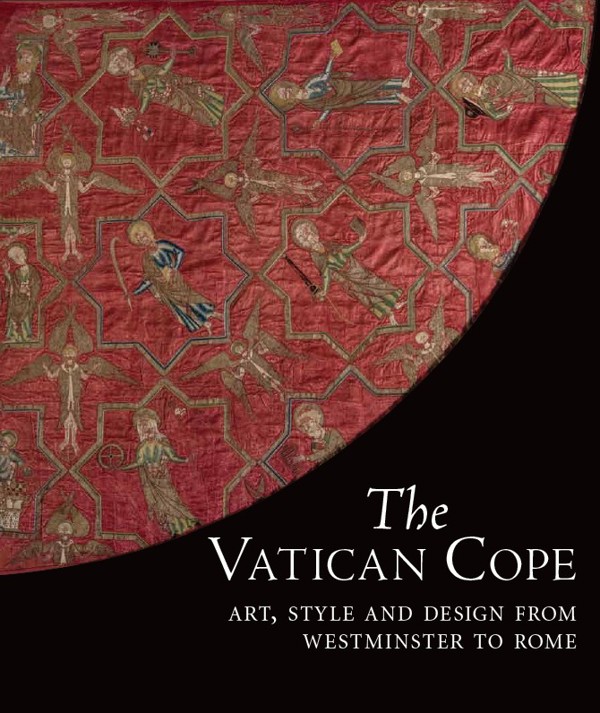
The book opens with a paper by Alessandra Rodolfo, a curator of the Vatican Museums, on the history of the Vatican Cope. The paper reads like a crime story in which nuns were screwed by Vatican officials in the early 20th century. Up until then, the nuns had taken good care of the cope. Unfortunately, their convent buildings needed urgent repairs, and they did not have the money. The cope became part of the Vatican collections, but the nuns were not fairly compensated. How the nuns acquired the Vatican Cope in the first place has been lost to time. It is, however, possible that it was a gift from King Edward I (1272-1307) to Pope Boniface VIII (papacy 1294-1303), who re-gifted it to his friend Matteo d’Acquasparta (1240-1302), protector of the convent of the Poor Clares.
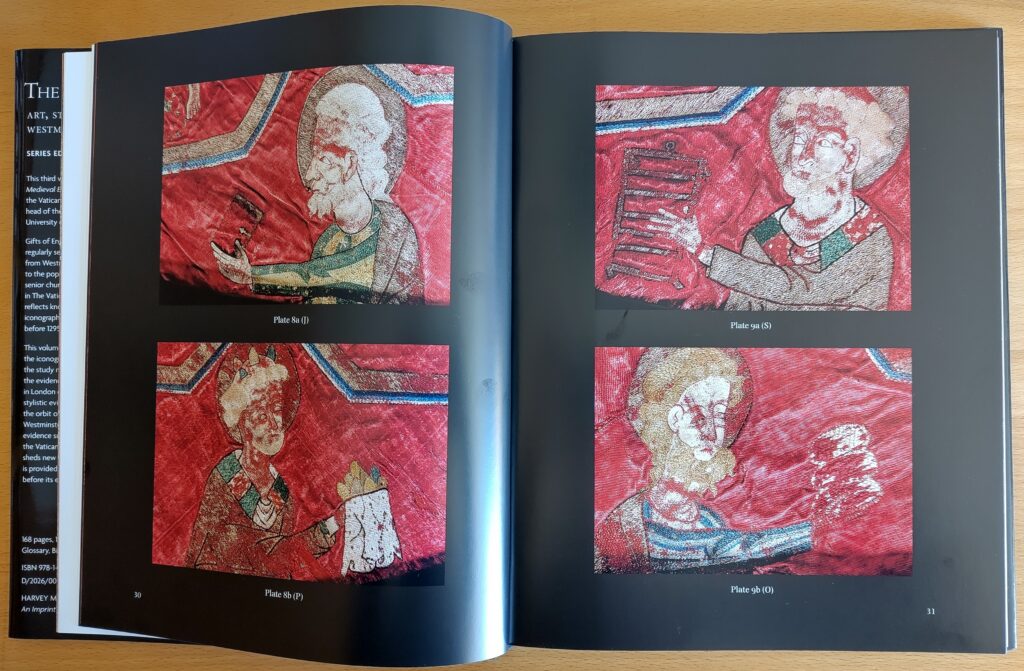
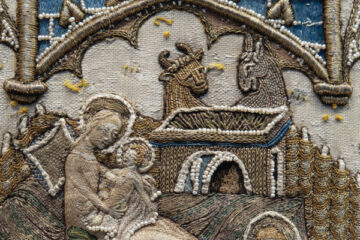
The book continues with 18 full-spread plates of the Vatican Cope and a key to its iconography. It is followed by a paper by Michael Michael, the series editor, on the Design, Style, Date and Iconography. This paper draws many parallels with other surviving artworks and embroideries. It becomes clear that Opus anglicanum embroiderers worked from a kind of model book for their designs. These design ideas were uniquely English and spread to the Continent with the finished embroideries. It shows that embroiderers near the Royal Court at Westminster were in touch with the leading illuminators and painters of the late 13th century.
Michael’s paper is followed by a paper by Lisa Monnas titled “Commerce, craftsmanship and diplomacy: opus anglicanum in context”. This paper clearly shows how intimately Italy and England were intertwined in the High Middle Ages. Italian bankers exported the raw materials to England needed to create the Vatican Cope. Opus anglicanum copes created in London were then used as diplomatic gifts from the English king to the papacy.
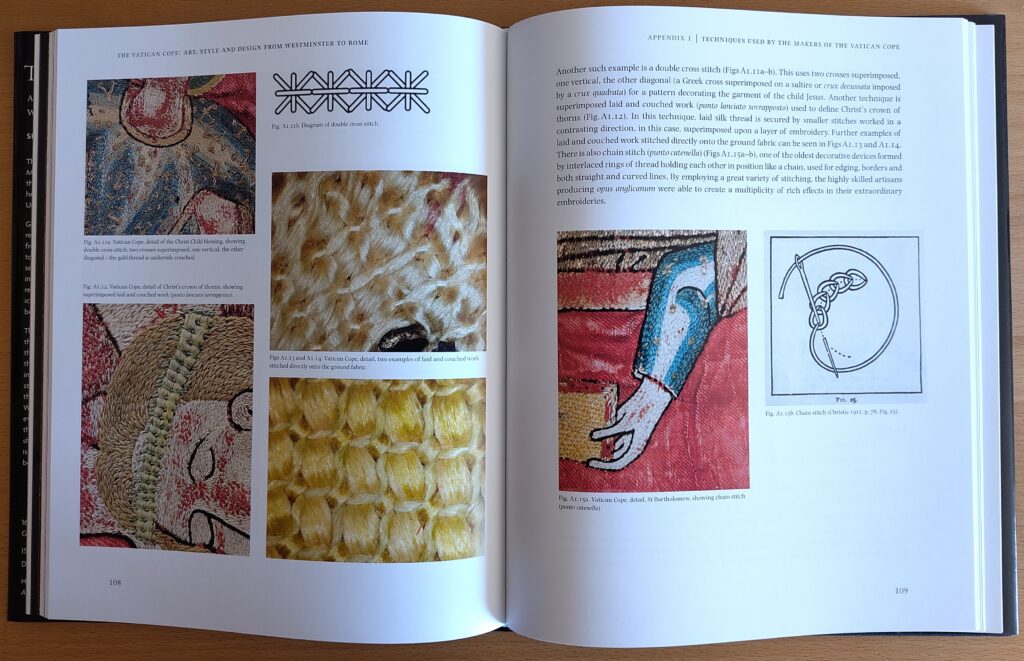
Monnas’ paper is the last paper in the book. But it isn’t the end! Her paper is followed by Appendices with technical details of the materials used, the stitches used, and certain conservation procedures applied. There’s a wealth of information in here for those who want to recreate Opus anglicanum with appropriate modern materials. The only thing still missing? The metal composition of the gold and silver threads. So far, I have not seen this information published for any of the Opus anglicanum copes. And that’s a shame. I would love to know how the Opus metal threads compare to those being used on the continent.
So, should you invest in a copy of the Vatican Cope book? That depends. It’s still more of a coffee-table book than a heavyweight academic monograph. However, its papers and appendices are much better than those published in the Bologna monograph. If you have the cash to spare and you love a pretty book sitting on your shelves – go for it! In the meantime, I wonder which Opus anglicanum cope will be the subject of the next monograph.
Literature
Michael, M.A. (Ed.), 2026. The Vatican Cope: Art, Style and Design from Westminster to Rome. Studies in English medieval embroidery III. Harvey Miller, London.
0 Comments