A couple of weeks ago, I showed you a curious piece of 12th-century goldwork embroidery from Palermo, Sicily. It was made by sewing down golden tubes and then flattening them. In the meantime, I was able to find a bit more information on the embroidery. These golden tubes are not as rare as one might think. However, they were originally probably not used for embroidery, but for making hair nets in the sprang technique. Let’s visit a couple of sarcophagi in Rome and some ‘Dark Age’ graves in Hungary!
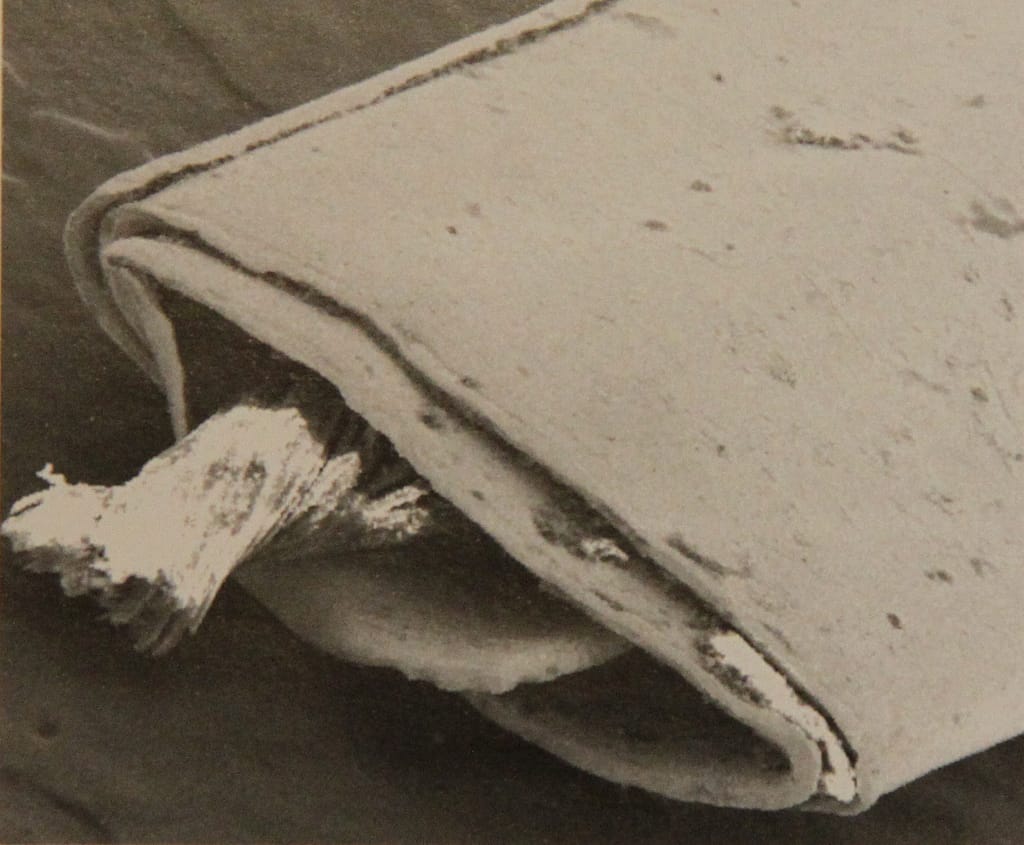
But first, back to the fascinating golden tubes used in the royal workshops in Palermo in the 12th-century. Above, you see a REM picture of one of these little tubes. It was likely made by wrapping a sheet of pure gold foil around a 1mm thick wire. The wire was then carefully removed, and the resulting golden tube was cut into smaller ‘beads’. Each ‘bead’ is about 1.4 x 0.8 mm in size. They were sewn onto the samite fabric with a white thread (no specification mentioned, but probably silk). When the embroidery was completed, the tubes were hammered flat to achieve a continuous, flat, shiny surface. This “hammering” can also be observed on some of the Imperial vestments kept at Bamberg. It is not possible with modern gold threads.
Similar golden tubes are regularly found in Roman burials in Italy and the wider Roman Empire. Some female burials contain up to 800 of these tiny golden elements. Sometimes fragments of fibres have also survived (linen and possibly silk). Comparing these finds with contemporary literary sources and wall-paintings has led to identifying them as the remains of reticulli (singular: reticulum). These were elaborate hair nets made in the sprang technique and either embellished with small golden tubes or made entirely from gold thread.
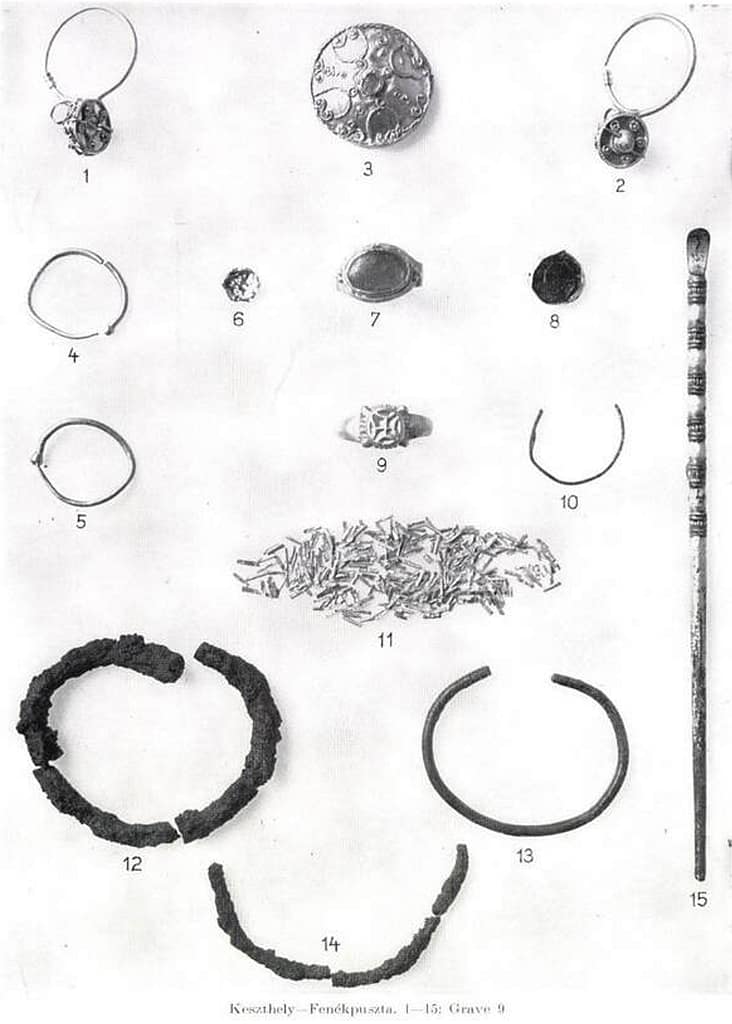
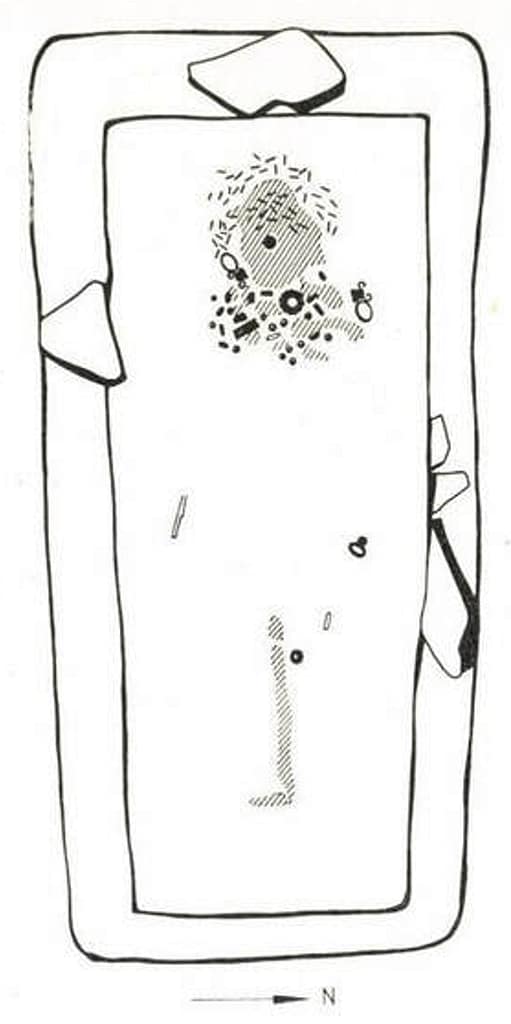
Although the Roman Empire ended in the West in AD 480, this isn’t the end of the golden tubes. Burials dating to the 6th century on the territory of the Roman castellum of Keszthely-Fenékpuszta in Hungary contain the same golden tubes as seen in the earlier Roman graves from Italy.
Interestingly, the Italian researchers seem to think that this particular hairstyle with a hair net originates in the Middle East. This fits well with the known Arab embroiderers stitching in the Royal workshops in Palermo in the 12th-century. Maybe the use of golden tubes as beads in goldwork embroidery also originates in the Middle East. Maybe someone experimented with the golden tubes used in traditional hair nets and developed the embroidery technique. It would be worthwhile to investigate Middle Eastern goldwork embroidery from before the 12th-century to see if pieces exist with these golden tubes. If anyone has additional information or ideas, please comment below!
Literature
Barkóczi, L., 1968. A 6th-century cemetery from Keszthely-Fenékpuszta. Acta Archaeologica Academiae Scientiarum Hungaricae 20, 275–311. This reference can be downloaded from this website.
Bedini, A., Rapinesi, I.A., Ferro, D., 2004. Testimonianze di filati e ornamenti in oro nell’abbigliamento di eta’romana, in: Alfaro, A., Wild, J., Costa, B. (Eds.), Purpureae Vestes. Actas del I Symposium Internacional sobre Textiles y Tintes del Mediterráneo en época romana. Universiat de Valencia, Valencia, pp. 77–88. This reference can be downloaded from the Academia page of one of the authors.
Járó, M., 2004. Goldfäden in den sizilischen (nachmaligen) Krönungsgewändern der Könige und Kaiser des Heiligen Römischen Reiches und im sogenannten Häubchen König Stephans von Ungarn – Ergebnisse wissenschaftlicher Untersuchungen, in: Seipel, W. (Ed.), Nobiles Officinae. Die königlichen Hofwerkstätten zu Palermo zur Zeit der Normannen und Staufer im 12. und 13. Jahrhundert. Kunsthistorisches Museum Wien, Wien, pp. 311–318.
0 Comments