As part of the ‘Samt und Seide 1000-1914. Eine Reise durch das Historische Tirol’ (Velvet and Silk 1000-1914. A trip through historical Tyrol) exhibitions organised by the European Textile Academy, my husband and I visited Brixen/Bressanone and Klausen/Chiusa. We were completely blown away by the high-quality embroidered textiles we saw and are already planning two more trips. Unfortunately, for most of you, Northern Italy is a bit further away than our three-hour drive. However, if you are ever in the neighbourhood, do visit the two museums I will introduce you to further below! They are absolutely worth it. And do take a print-out of this blog with you if you are not proficient in either German or Italian, as English is not the lingua franca in Northern Italy…
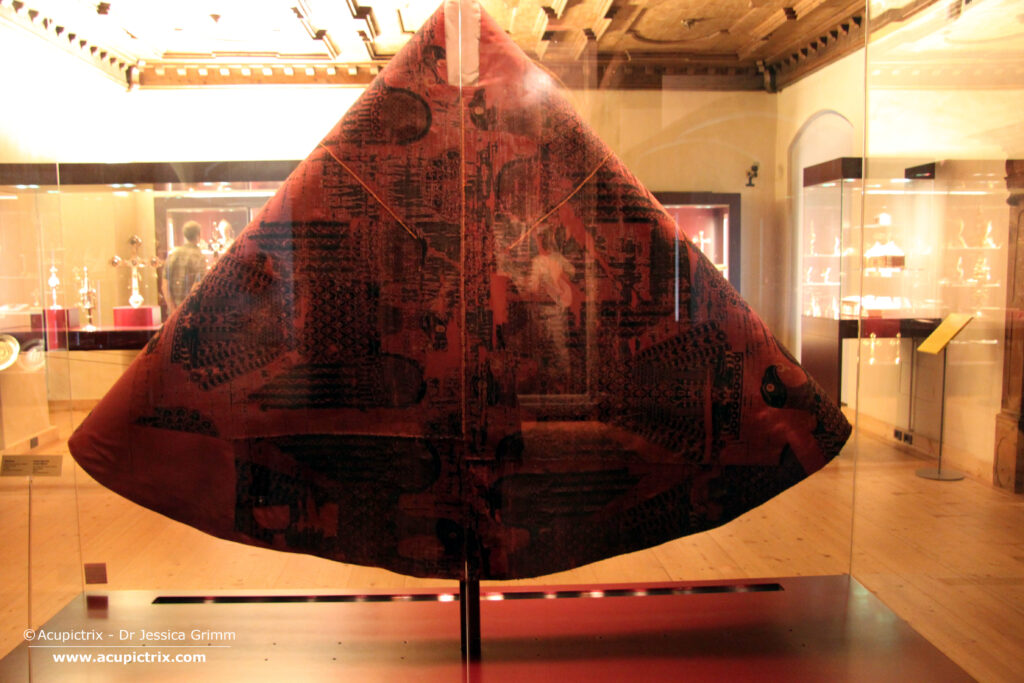
First up is the Diözesanmuseum in Brixen. It houses the cathedral treasure of the former Diocese of Brixen. A large part of their permanent exhibition is devoted to textiles. The oldest being from around 1000 AD! However, this museum follows the modern concept of presenting historical art as art. Descriptions of the individual objects are very meagre and only available in German and Italian. There is nothing wrong with appreciating pieces as they are and enjoying the display in front of you. However, I would have liked the option to get more information. Preferably as laminated information available in the display room, AND a decent catalogue to take home. After all, I like to go to museums to learn and broaden my knowledge. That said, the sheer amount of high-quality exhibition pieces gets you into textile heaven in no time.
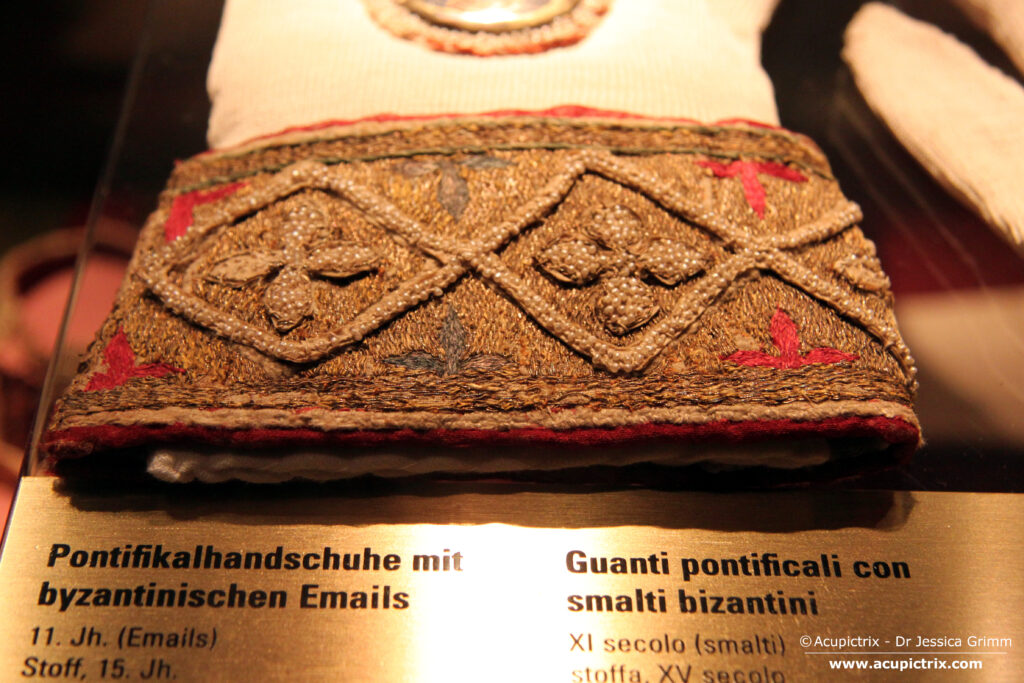
My favourite pieces were the oldest pieces. Just the idea that the Eagle Chasuble (Adlerkasel) dates to 1000 AD. It was made at the court of the Emperor of Byzantium and given to Bishop Albuin of Brixen. It was probably one of the first silken vestments which arrived in this part of Europe. Due to its great antiquity and pretty good conservation status, it is one of the most important textiles of Europe. Another highlight was these pontifical gloves dating to the 15th century. They feature email medallions from 11th-century Byzantium, showing again how important this imperial city once was in medieval Christian Europe. And aren’t these tiny beads made of freshwater pearls to die for? I definitely want a pair!
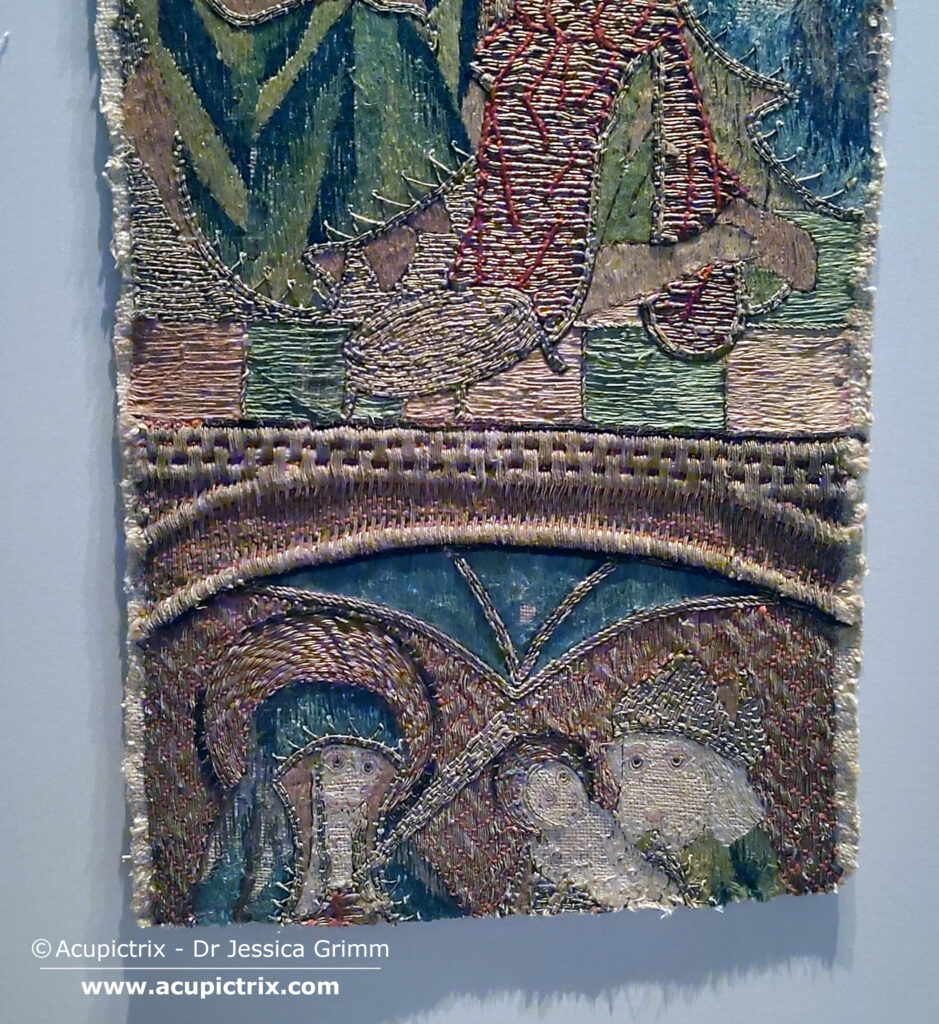
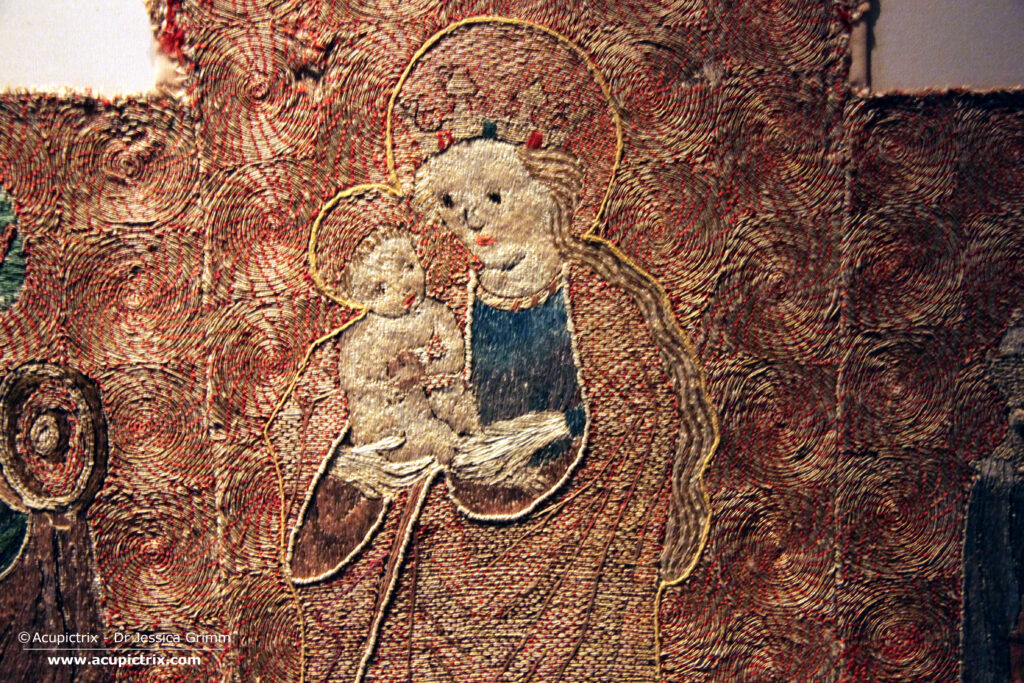
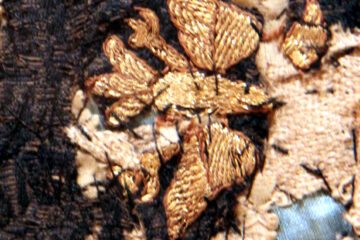
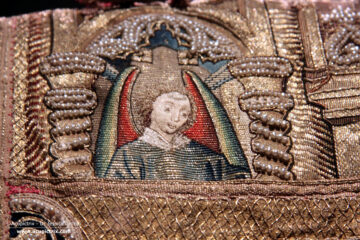
The museum also has several 15th-century orphreys on display. These heavily embroidered gold-and-silk pieces were once appliqued onto a chasuble. Look at those couched diaper patterns forming a pretty background for the holy figures. Just unbelievable that someone cut through them to make them fit onto a new vestment…
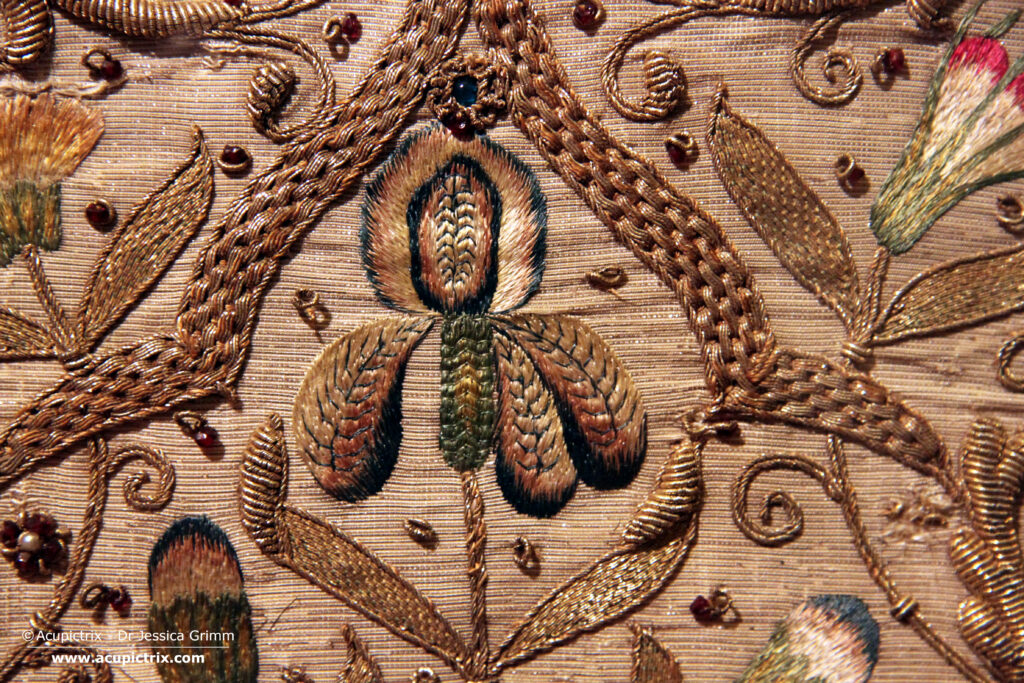
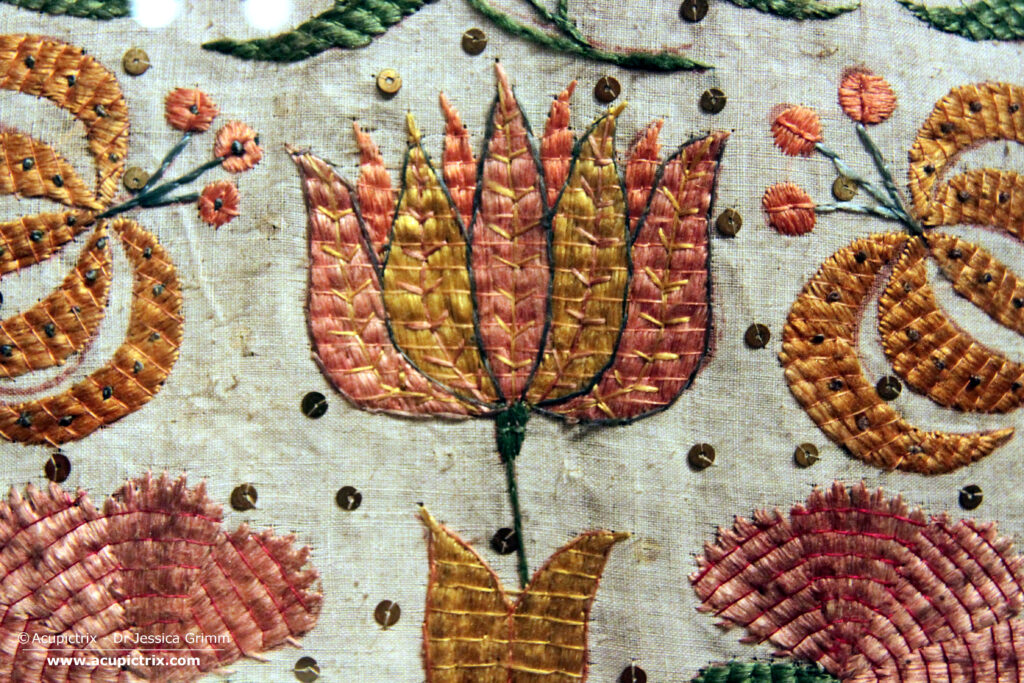
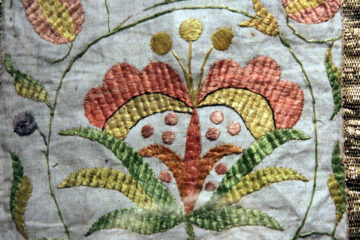
Then there were 17th-century chasubles with colourful silk and goldwork embroidery. I particularly liked the one with the small and detailed flowers. Look at the iris worked in long-and-short stitch, then further embellished with tiny fly stitches to give the speckled impression often seen on an iris. The other chasuble shows a particular style of silken laid-work with couching stitches, which I first encountered on an Italian piece in the Wemyss School of Needlework Archive. I think it is very colourful and pretty. Great sources of inspiration!
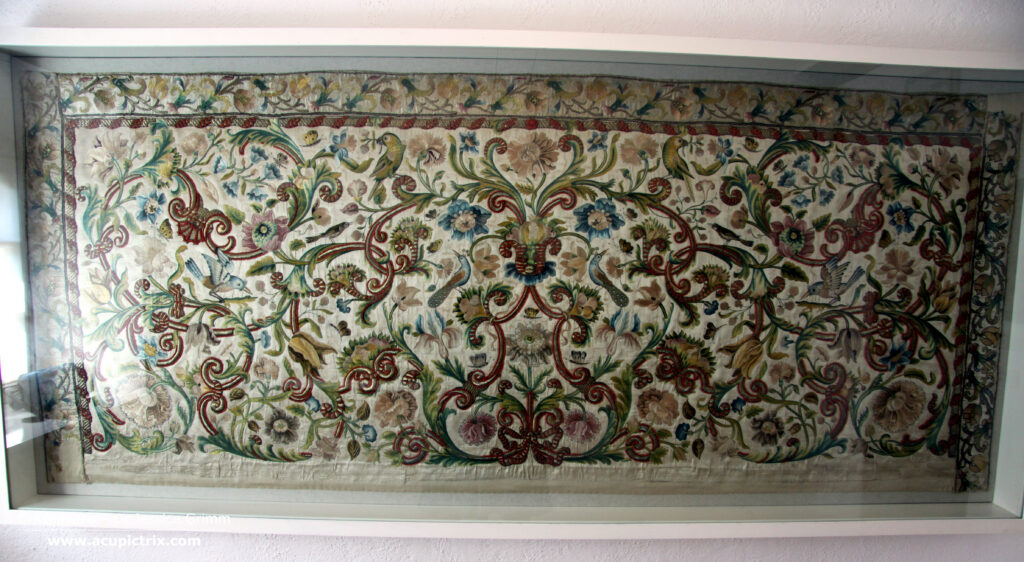
The next museum we visited was the Stadtmuseum in Klausen/Chiusa. They have by far the better (i.e., higher-quality) textile collection, and it is displayed so you can get very close to the pieces, with excellent lighting. Unfortunately, I wasn’t allowed to take pictures. I didn’t know I wasn’t allowed to take any, so I can at least show you an antependium, or altar cover, from the Loreto treasure. And I (and the very friendly museum wardens) hope it will whet your appetite and prompt you to plan a visit too. And that you will help spread the word that this museum has a high-importance textile collection. As they are a tiny museum with an equally tiny budget, they need our help. So please show them some love.
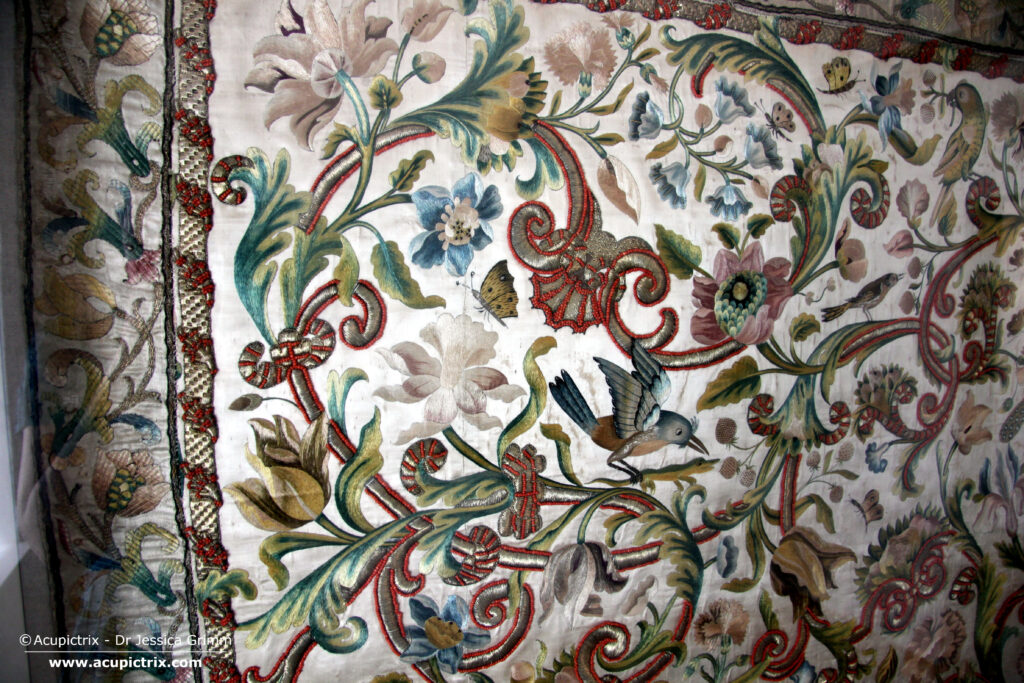
But first, let me tell you a little more about what is known as the Loreto Treasure. Maria Anna of Neuburg became queen of Spain, Sicily, Naples and Sardinia when she married King Charles II of Spain in 1690. She brought with her her confessor, Pater Gabriel Pontifeser, born in Klausen. He was a trusted and loyal advisor, and she pledged to build him a monastery in his hometown of Klausen. The house he was born in was turned into a Loreto chapel. Queen Maria Anna, her husband and the Spanish nobility gave beautiful religious objects to the chapel. The Loreto treasure was born.
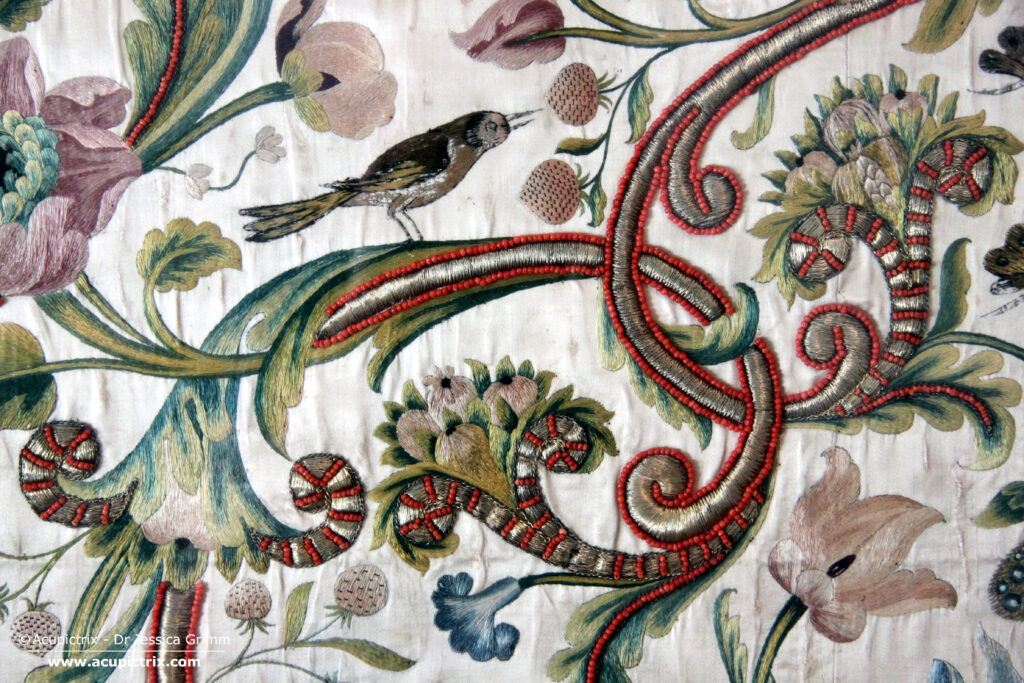
Permanently on display in the museum are several highly decorated altar covers. Apart from the one displayed above, which was probably stitched in Sicily, there is a further piece stitched in wool on linen, and a silk-and-goldwork piece in the Ottoman style. Interestingly, in the piece I was able to photograph, the main part, with its flowers, birds, and butterflies, is stitched with long-and-short stitch. However, the border shows the same laidwork technique as seen before on the chasuble in the Diözesanmuseum Brixen. In addition to silk and gold threads, the piece is adorned with red coral beads. This piece is truly to die for! It is very seldom that you encounter embroidery of such high quality that has kept so well. Other spectacular pieces were several chasubles with the same high-quality silk and goldwork embroidery. If you are ever in the area, this is a museum not to be missed!
0 Comments