For the past couple of months, I have been investigating a particular silk embroidery technique from Tyrol. In lieu of a better name, I called it ‘Italian couching’. Since this name is already taken in the embroidery universe for not one, but two very different embroidery techniques, I have dropped it. The sparse German literature on the matter refers to it as ‘linen vestments from Tyrol’. Perfect! Taken.
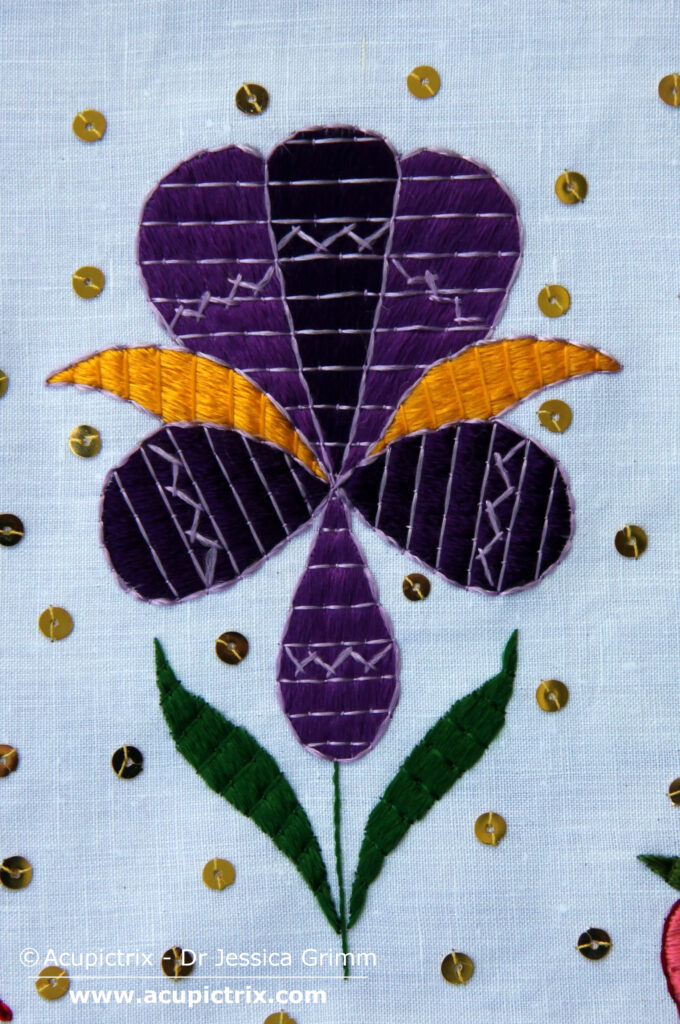
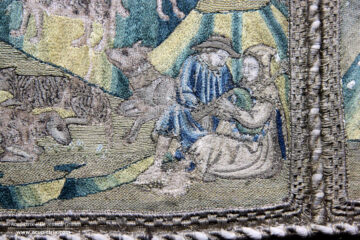
What is so special about this particular silk-on-linen embroidery? Several things. But my most recent discovery involved the embroidery technique itself. Upon close study of my pictures of the Diözesanmuseum in Brixen, I discovered that there were no short stitches in the laidwork. Not even when a shape narrowed. Hmmm. Not a ‘normal’ Bayeux stitch in silk after all. So what did the stitchers from Tyrol do differently on those linen vestments?
Basically, to achieve a curved petal or leaf, they sculpt their laidwork as they place the long couching stitches on top. As this is a little hard to explain in writing, I made my first-ever instruction video. You’ll see me work on a simple leaf. Whilst stitching the laidwork, I sometimes push previous stitches aside. When adding the long couching stitches, I really ‘work’ my laidwork to form a nicely curved leaf with really nice tips. And I think this is the reason why the Tyrolian stitchers sculpted some of the embroidery elements: really, really nice tips! And I think this sculpting is what sets this embroidery style apart from, for instance, the Castelo Branco embroidery from Portugal. But please correct me if I am wrong.
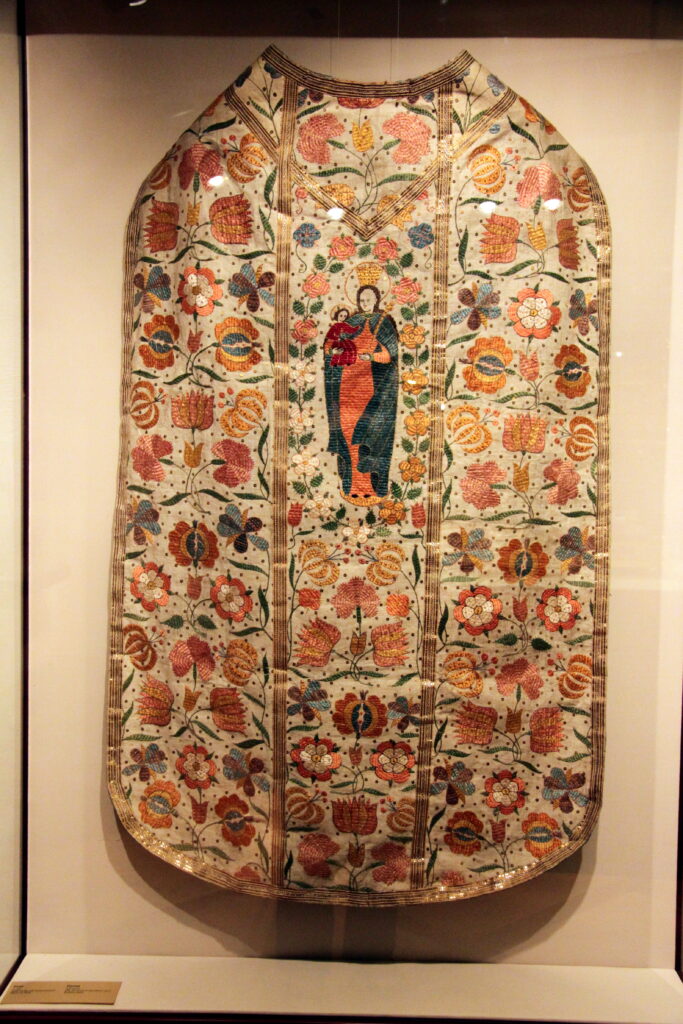
You can find an eBook with detailed (video) instructions for the eight flowers found on the Brixen chasuble in the members’ section of this website. The 24-page eBook includes the historical background of these linen vestments, as well as a list of museums that hold them in their collections.
0 Comments