The Museo dell’Opera del Duomo di Pisa exhibits a magnificent piece of 14th-century Italian embroidery. It is known as the cope of Gelasius II, who was pope from AD 1118 to 1119 and consecrated the Pisa Cathedral. As you can tell from the dates, a 12th-century pope cannot wear a 14th-century cope. Especially not as the cope is further adorned with an orphrey from the 15th-century. However, attributing vestments to important figures aids their survival to the present day. And as 14th-century embroidery is generally rare, I am only too glad for the wrong contribution. Let’s explore this outstanding piece of Italian embroidery.
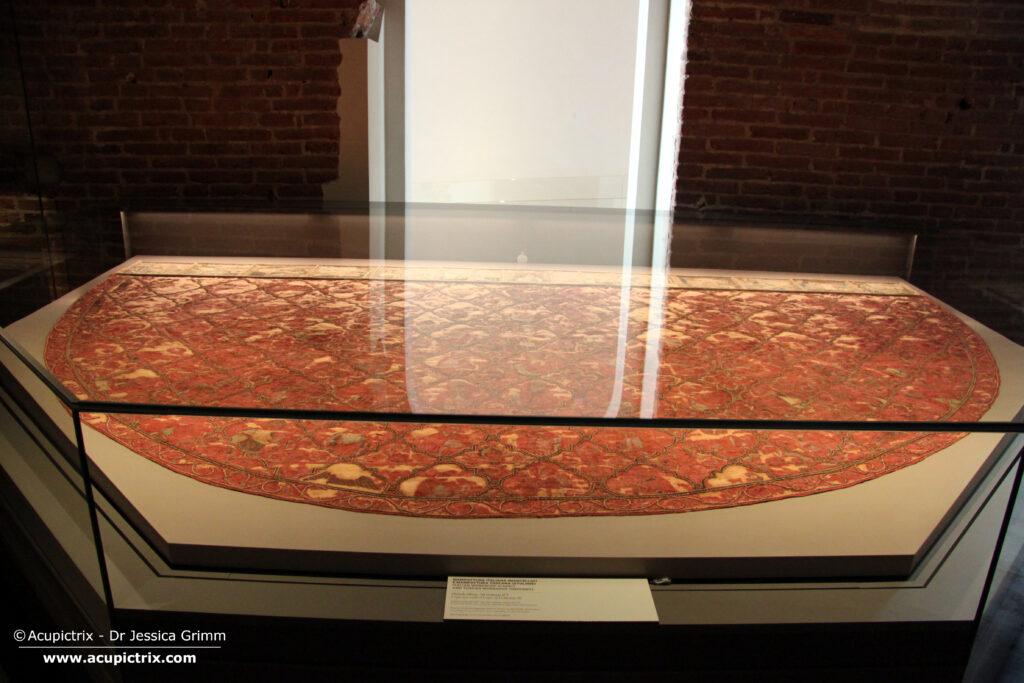
As you can see in the picture above, this vestment with Italian embroidery is typical of the 14th century and earlier. It shows a design that covers the whole body of the cope with a separate orphrey attached at the front. All-over embroidered copes on red silk or velvet were also made in England at the time. Famous Opus anglicanum copes from the 14th-century include the Jesse Cope, the Butler-Bowden Cope, the Steeple-Aston Cope and the Vic Cope.
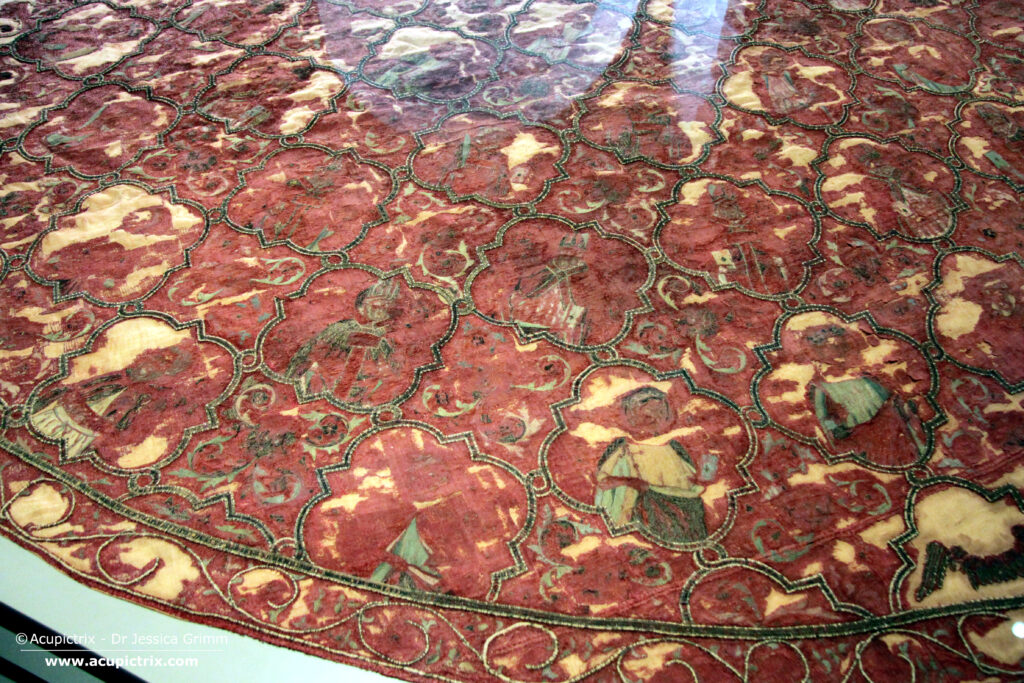
The design of the cope also imitates patterned silks that first entered Europe from the Byzantine imperial workshops. Contrary to what weavers could achieve, the regular grid of linked barbed quatrefoils of the cope could be filled with different embroidered designs. In this case, the busts of saints. The void between the barbed quatrefoils is filled with the same floral element.
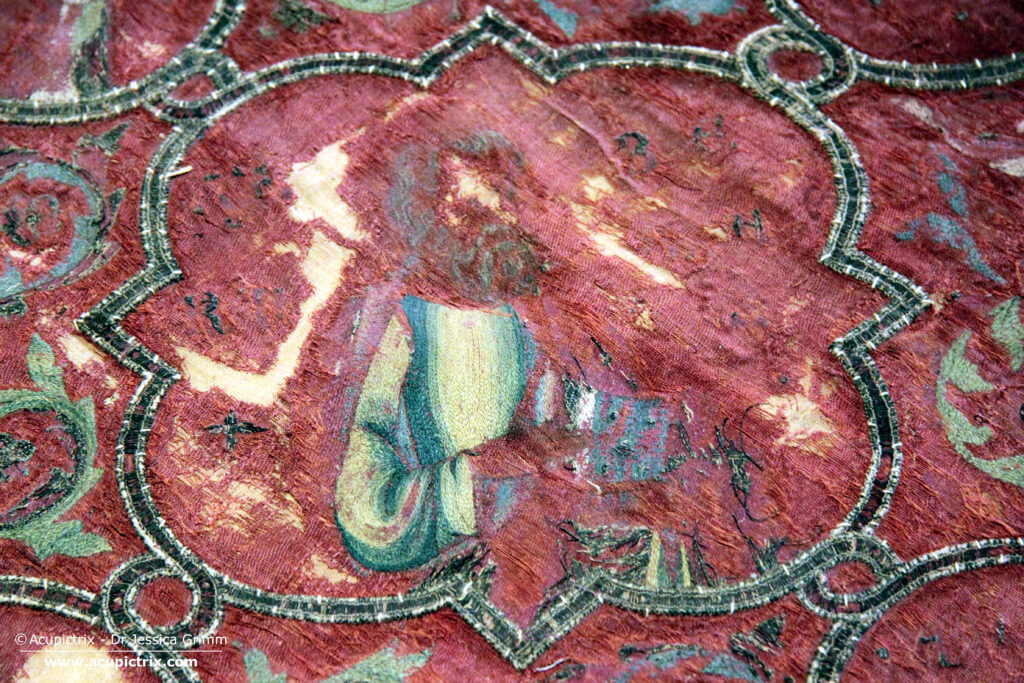
Are the embroidery techniques used in this 14th-century Italian embroidery also comparable to Opus anglicanum? Yes and no. In the picture above, you see the shaded directional split stitch that is also characteristic of Opus anglicanum. However, the gold threads used for some parts of the saints and floral elements are surface-couched rather than the underside couching seen in Opus anglicanum. So, no underside couching?
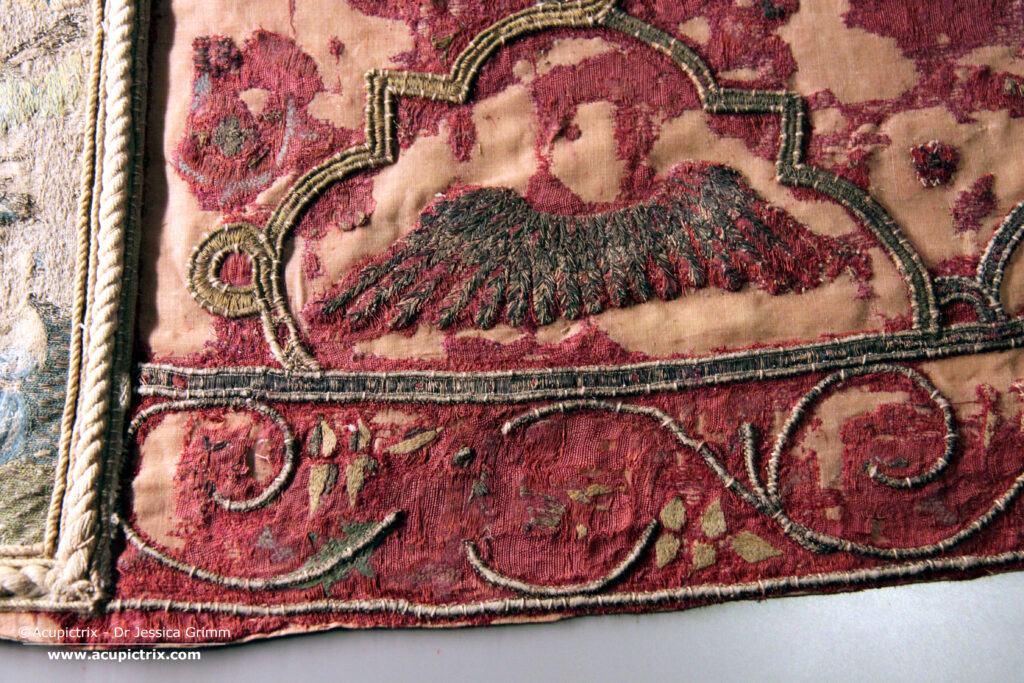
I think there might be underside couching going on. See these angel’s wings? They are done in feather stitch with a gold thread. That’s an underside couching technique seen in winged Opus anglicanum creatures, too. And what about the gold threads that go over the white string padding of the barbed quartefoil frames and the floral border along the seam of the cope? Although the embroidery is very damaged, and I have not seen a picture of the back, it looks like underside gimped couching. It shows that underside couching was known in Italy in the first half of the 14th-century. Italian embroiderers just did not fancy filling a whole cope with this particular technique. Quite sensible people, when you ask me :).
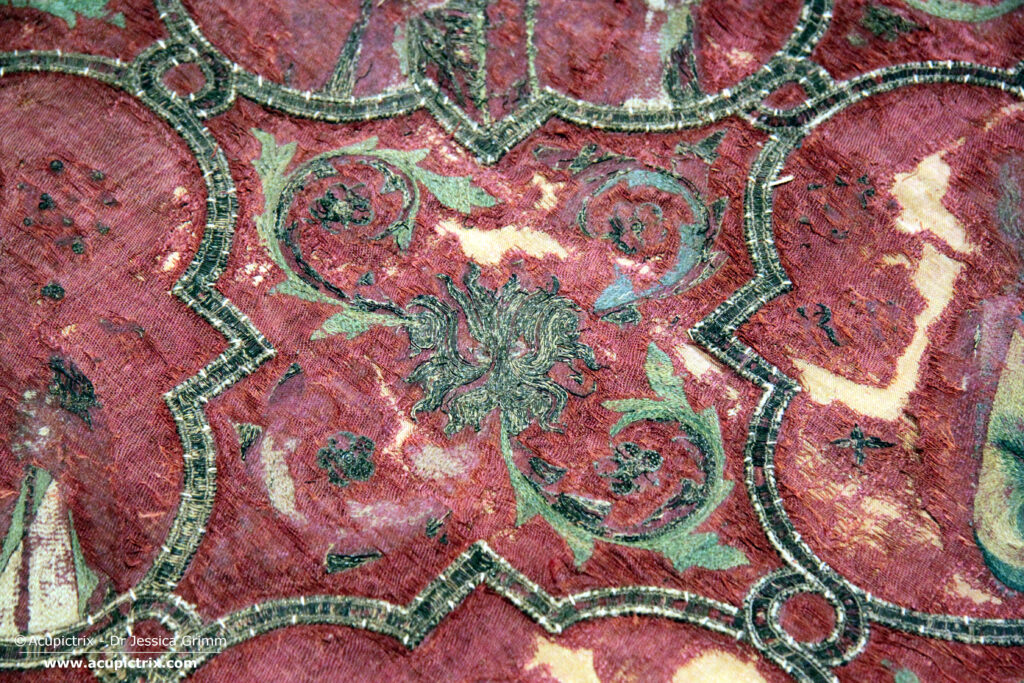
When we look at the golden couched centre of the floral elements, it shows that the gold threads follow the flow of the petals. This technique is seen in 14th-century goldwork embroidery all over Europe. The fact that the gold threads are so abraded (the linen? core can often be seen) and corroded, much more than seen for contemporary Opus anglicanum, makes me wonder if these are membrane threads rather than metal foil threads. Unfortunately, I have not been able to find a publication for this beautiful piece of Italian embroidery.
Next week, we will have a closer look at the embroidered 15th-century orphrey of this cope.
1 Comment
Dagmar · April 21, 2026 at 7:55 pm
Thank you Jessica, for these interesting insights. Again, very eye-opening and spotting details I would never have realised myself.