Apart from my passion for medieval goldwork embroidery, I am also interested in all kinds of folk embroidery. I particularly like the geometric cross-stitch patterns of Fallahi embroidery found in Egypt, Jordan, Syria and Palestine. A couple of years ago, I bought my first Bedouin dress from Egypt, and last year I bought a second one from the same source :). I love dissecting these dresses and their very colourful patterns! And since I was without a proper internet connection for so long after we moved house in November, transcribing the cross-stitch patterns was one of the few things I could do, as the software does not require one. So, let’s unravel the mystery of another vintage Bedouin dress!
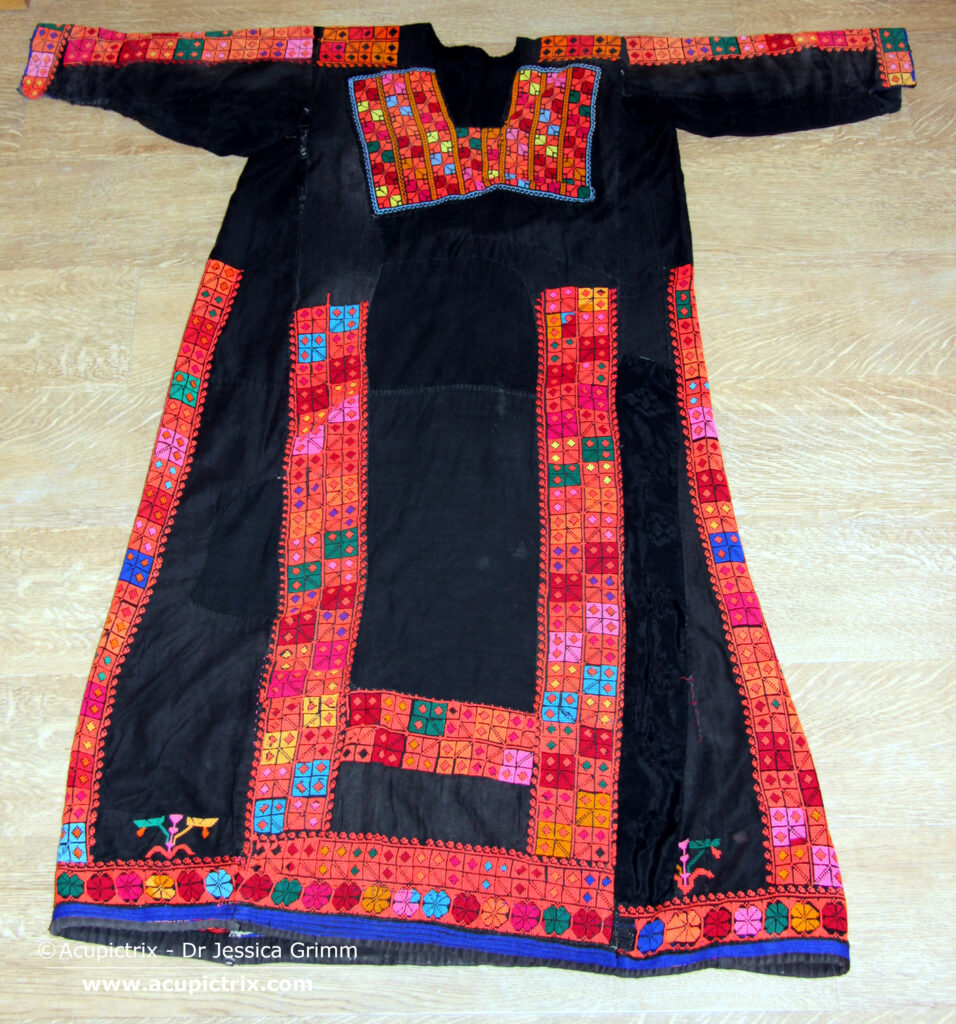
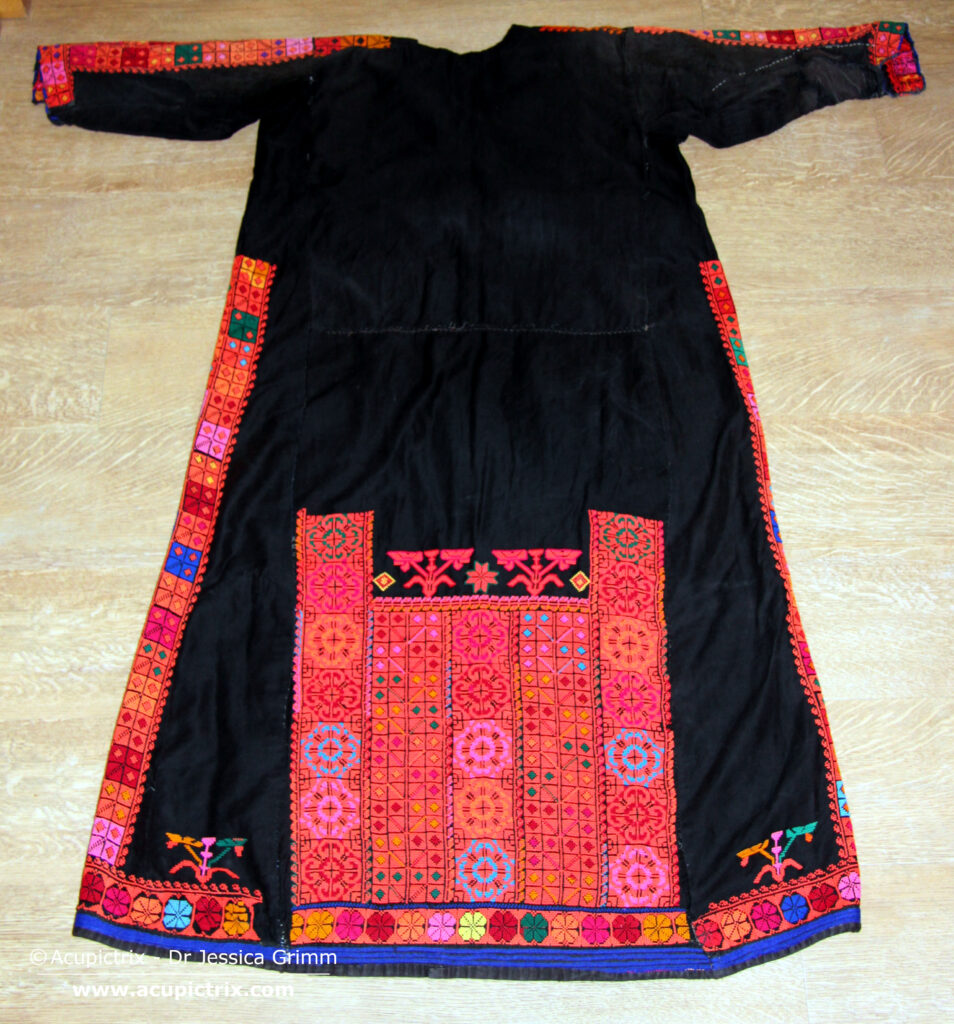
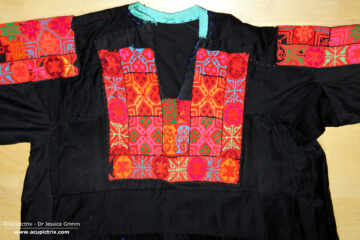
The dress, or thob, is 130 cm long and measures 125 cm across the arms. The dress originates in the Sinai (Egypt) and was once worn by an adult Bedouin woman. The satin-stitched dark-blue hem distinguishes the dress from Palestinian village dresses, which do not feature such a hem. The Bedouin travelling lifestyle and the fact that this geographical area has experienced significant political upheavals make it impossible to attribute precise provenance to the dress. Over time, too much mixing has happened. However, certain characteristics do point to the Western part of the Northern Sinai, possibly Al-Qantara: a wide neck opening, the use of many bright colours in simple geometric patterns, some of which are based on the carnation.
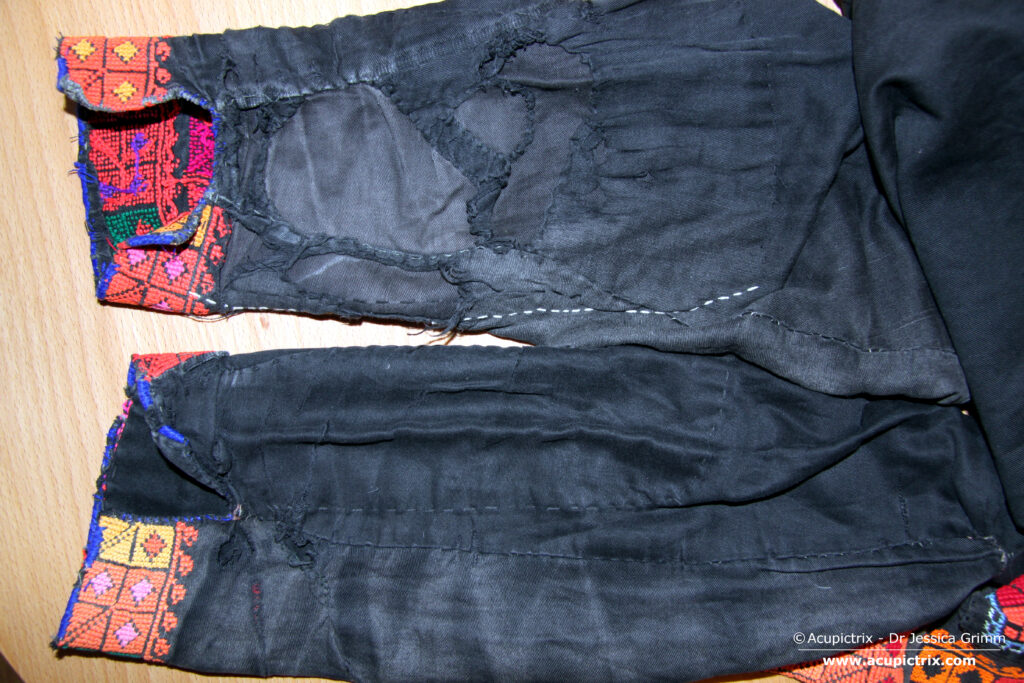
The dress has been patched many times. Especially in the cuff area. These dresses took a long time to decorate and were thus highly valued. Instead of throwing them away when they were worn, they were repeatedly patched. Recycling, upcycling and mending are usually the norm in pre-industrial societies.
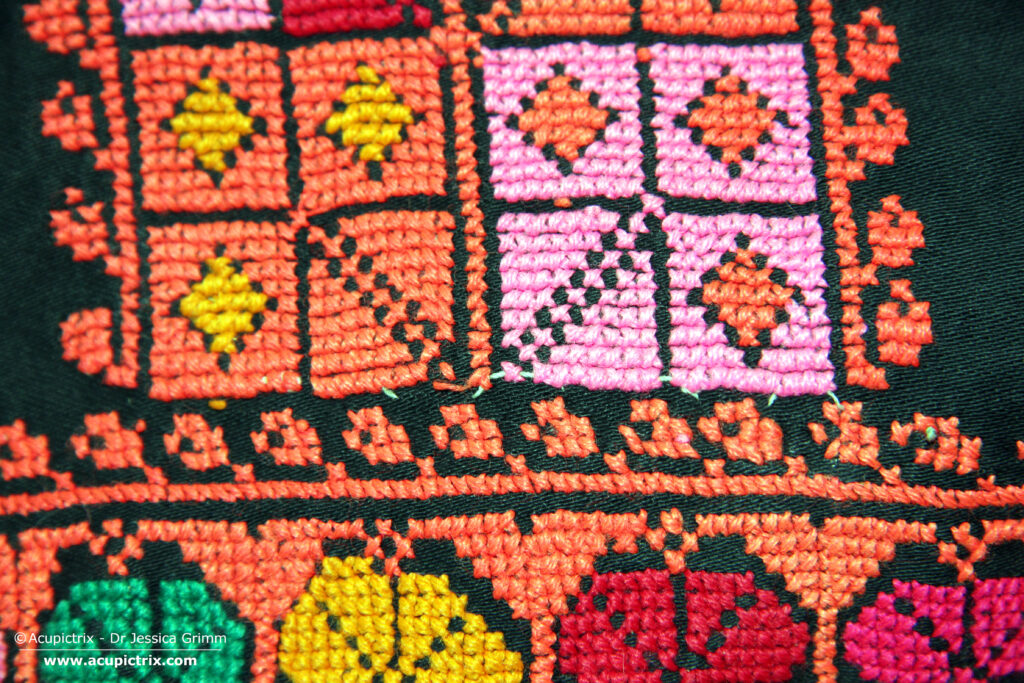
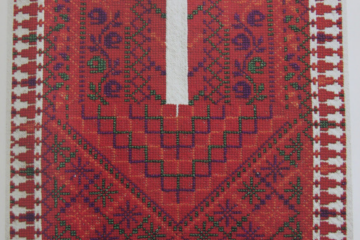
As most of you know, embroidering on black fabric is really hard, especially for older eyes :). Therefore, the Bedouin women tacked a piece of waste canvas onto the black cotton satin or polyester fabric. In the picture above, you can see a few white canvas threads left in the embroidery.
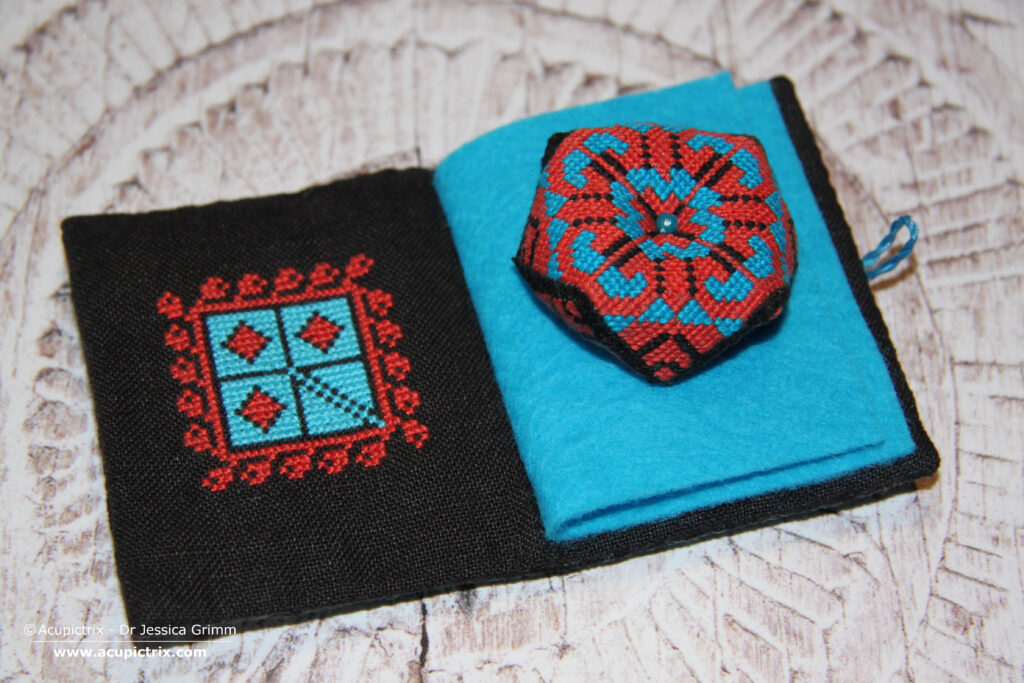
The Fallahi cross-stitch patterns and bright colour combinations found on the vintage Bedouin dress are perfect for decorating needle booklets, pincushions and the like. I used three of the five patterns found on the dress to make a small needle booklet and a cute biscornu. For the stitching, I matched the original floss colours to the closest DMC stranded cotton equivalent. My fabric is a piece of 40 ct natural-coloured Zweigart linen (I dyed some of it black in my washing machine).
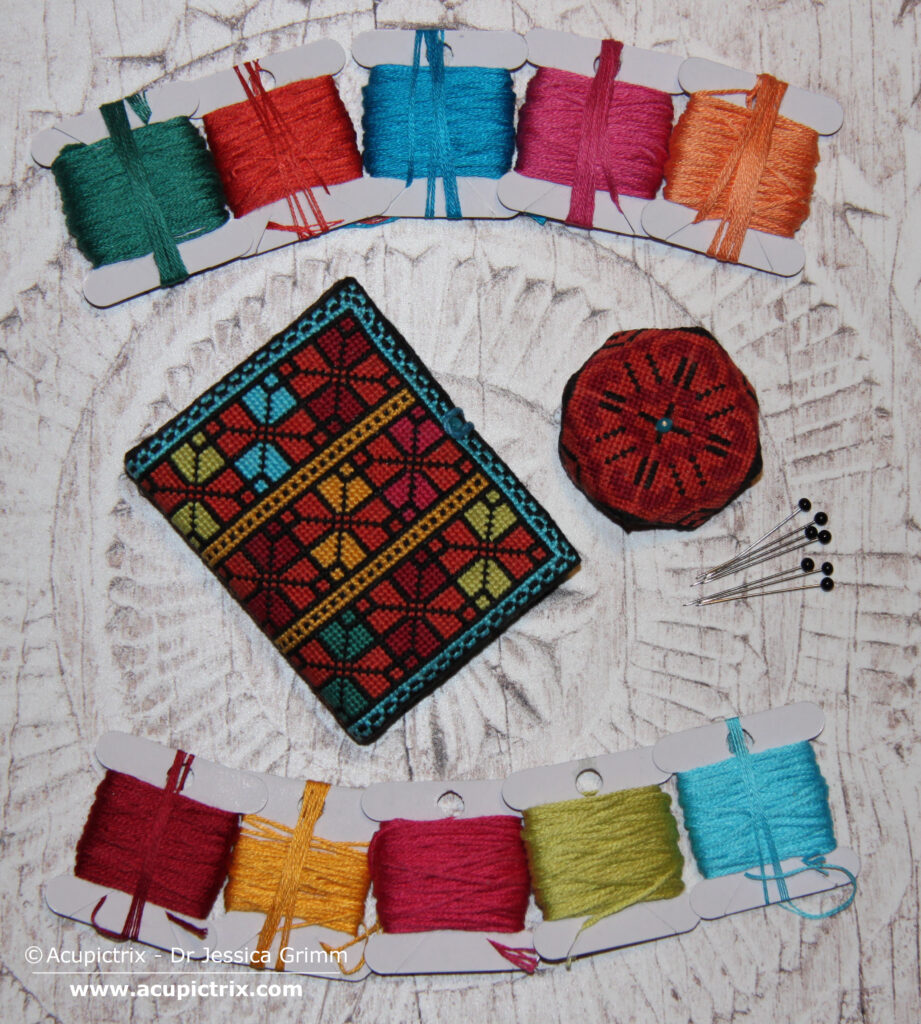
You can find a 39-page eBook for direct download, with more pictures and all Fallahi embroidery charts for the five geometric patterns, three loose elements, and a decorative border, in the members’ section of my website.
0 Comments