When I was in the Netherlands shortly before Christmas, my parents and I stumbled upon a lovely Middle Eastern shop in Utrecht. They mainly sell ceramics, but they also have a rather large collection of textiles. Among the latter are several embroidered items of clothing and cushion covers. I bought a dress showing Fallahi or Palestinian embroidery. For those of you living in the Netherlands: the name of the shop is ‘Samira’, and you’ll find them at Oude Gracht 209. The friendly Egyptian man running the store is happy for you to come in to see the textiles on display. They also have a website with many pictures of old Bedouin dresses.
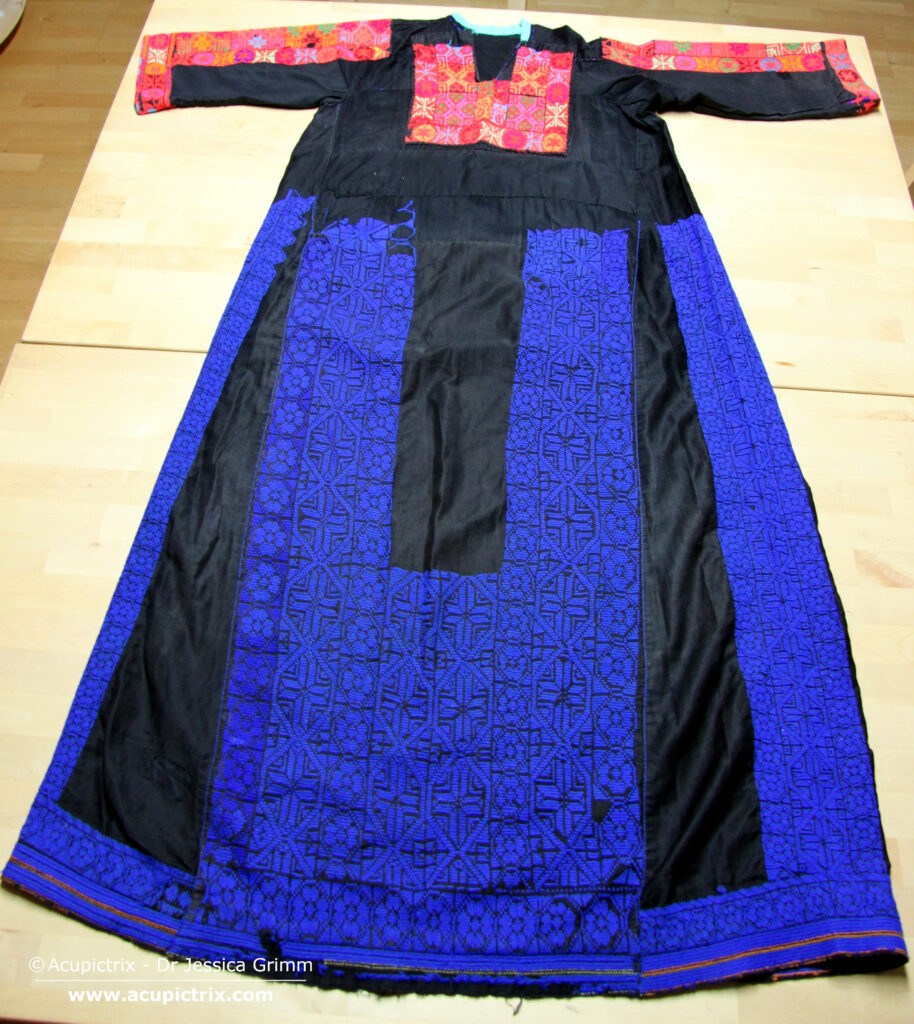
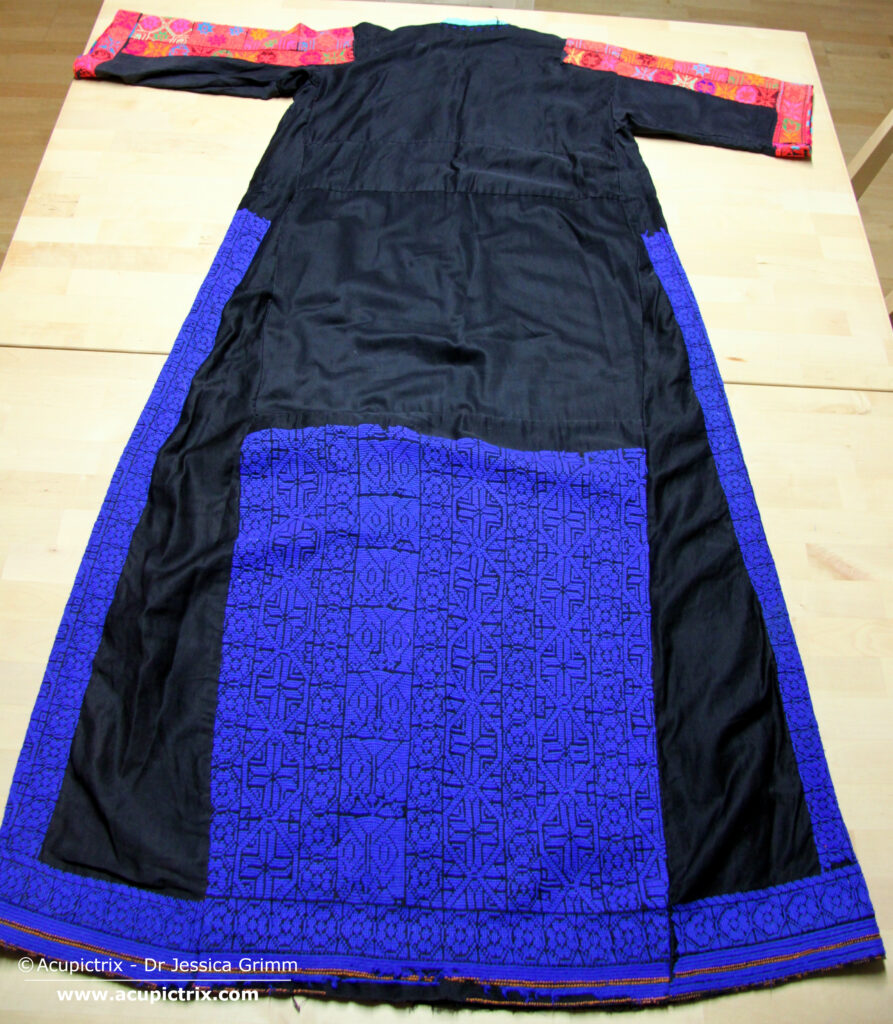
Here you see the front and the back of the Fallahi embroidered dress. According to the seller, this dress comes from the Bedouin living in the Sinai desert. This is confirmed by the seam sporting bands of slanted tent stitches. Dresses like these always tell a story…
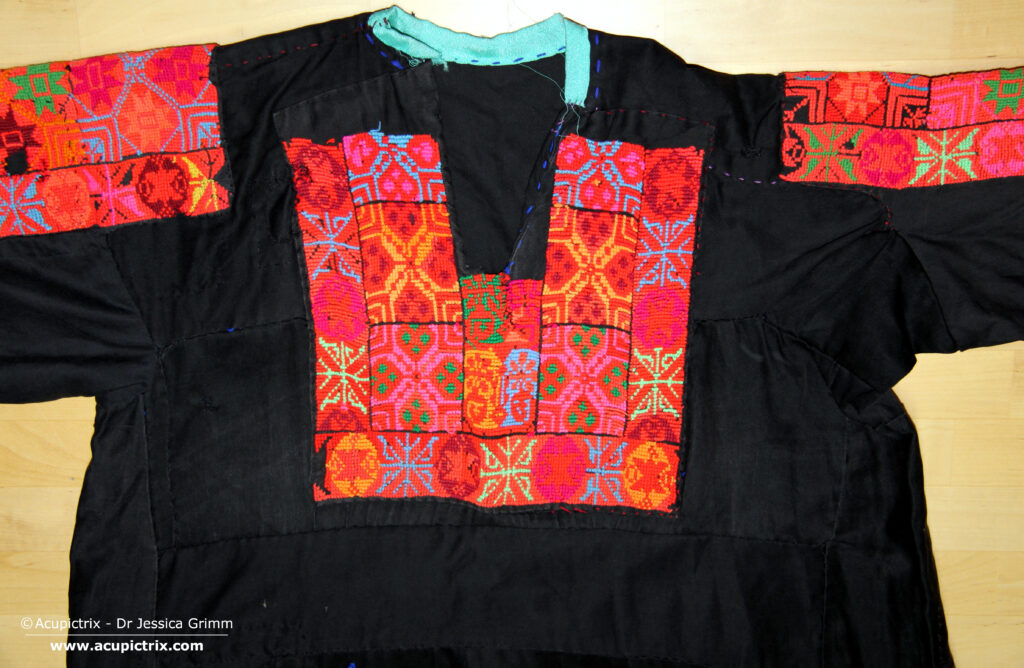
Firstly, the dress has been patched together from many pieces. Sometimes Fallahi embroidered pieces have been sewn onto the background cloth (as is the case with the collar pictured above) or…
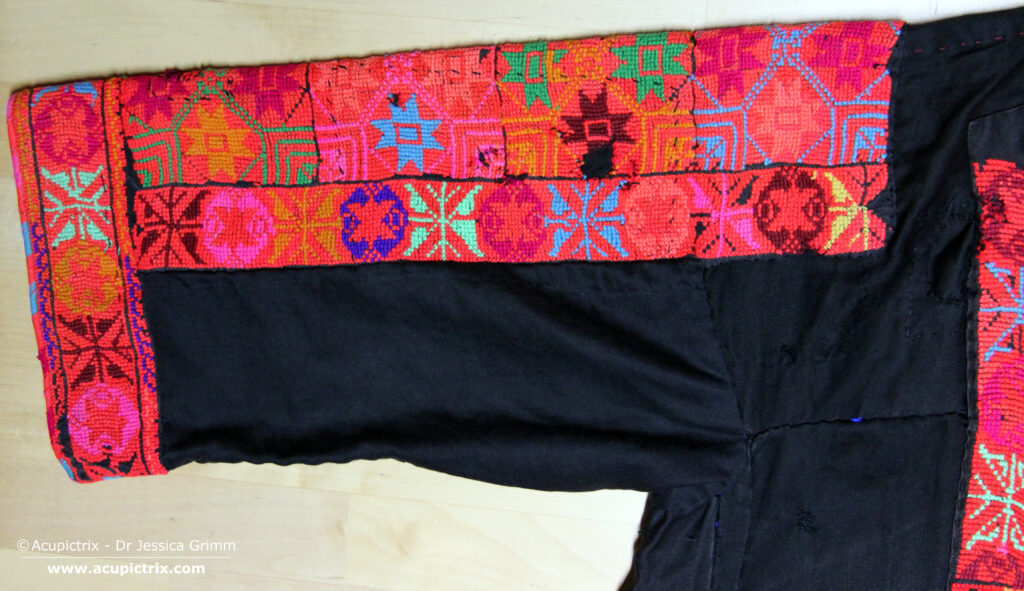
…embroidered pattern pieces have been sewn into the dress (as is the case for the sleeves you see pictured above).
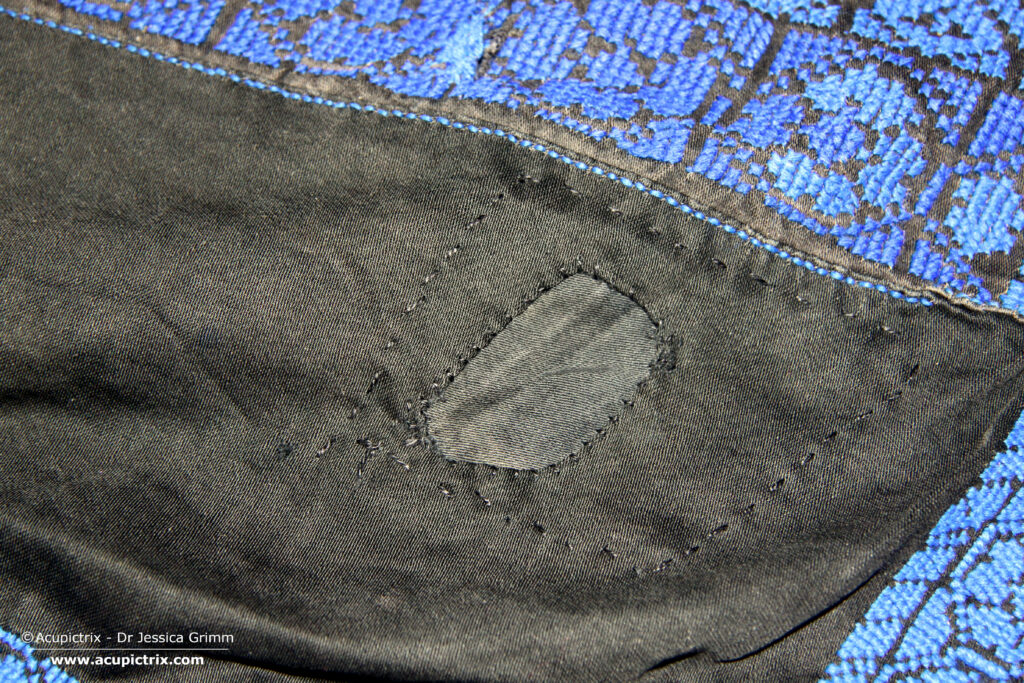
Furthermore, the dress has been patched up in many, many places. You can also see in the picture above that the Fallahi cross-stitching is worked on good-quality cotton satin. Not at all easy to count! And consequently, the embroiderer made many mistakes in the geometric patterns. Furthermore, there is always a deliberate mistake in these embroideries, as only God is faultless.
Why is this dress patched together the way it is? Firstly, it would take a Bedouin woman about three years to embroider a festive dress like this. Her days are filled with household tasks, so she has limited time to embroider. Consequently, it is normal that wear and tear would be repaired as best as possible. But what could she do when her life changed dramatically? Brides and married women would wear dresses embroidered with shades of red. Widowed women would use dark blue. And widows who would like to marry again would use a red collar. Once remarried, she would stitch reddish accents over the blue. Here we thus have the dress of a widowed woman seeking to remarry. A very similar dress is depicted on page 40 of the book ‘Stickereien für 1001 Nacht‘ (Embroideries for 1001 Nights) by Anna Dolanyi, published in 1989, ISBN 3-473-42427-7.
What else can we learn from this lovely piece of vintage Fallahi embroidery? Well, the wearer was probably right-handed, as the right sleeve shows much more wear and tear than the left one. Furthermore, I think the woman had a baby or small child on her hip. The collar has been torn, which typically happens when a child grasps it and does not want to be put down :).
You can find a downloadable PDF eBook on my two vintage Bedouin dresses in the members’ section of this website. It contains all the transcribed Fallahi cross-stitch patterns from both dresses.
0 Comments