Although my interest is primarily medieval goldwork, I have encountered a lot of younger embroidery in my research. Some of it is rather fun, like the needlepoint vestments seen in the 18th, 19th, and 20th centuries. Geometric, floral and figural scenes are worked on canvas with cross-stitches, tent stitches, and other typical needlepoint stitches. The designs are often quite bold, and the colour choices are striking. These needlepoint vestments show that whatever type of embroidery was popular at the time was also used to make liturgical vestments.
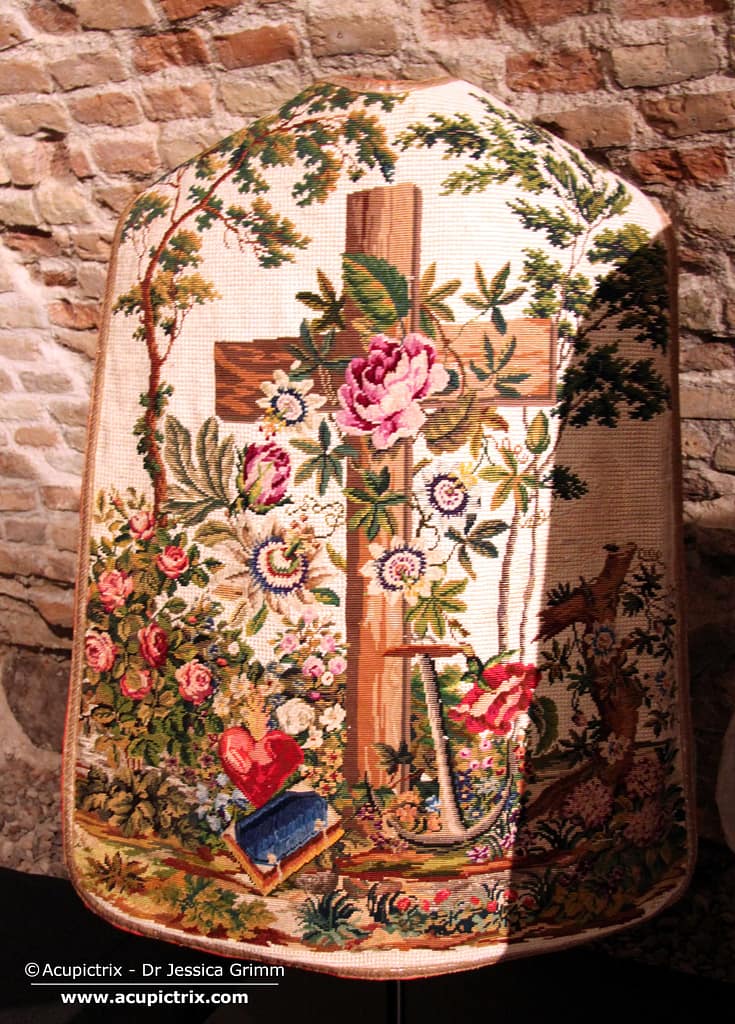
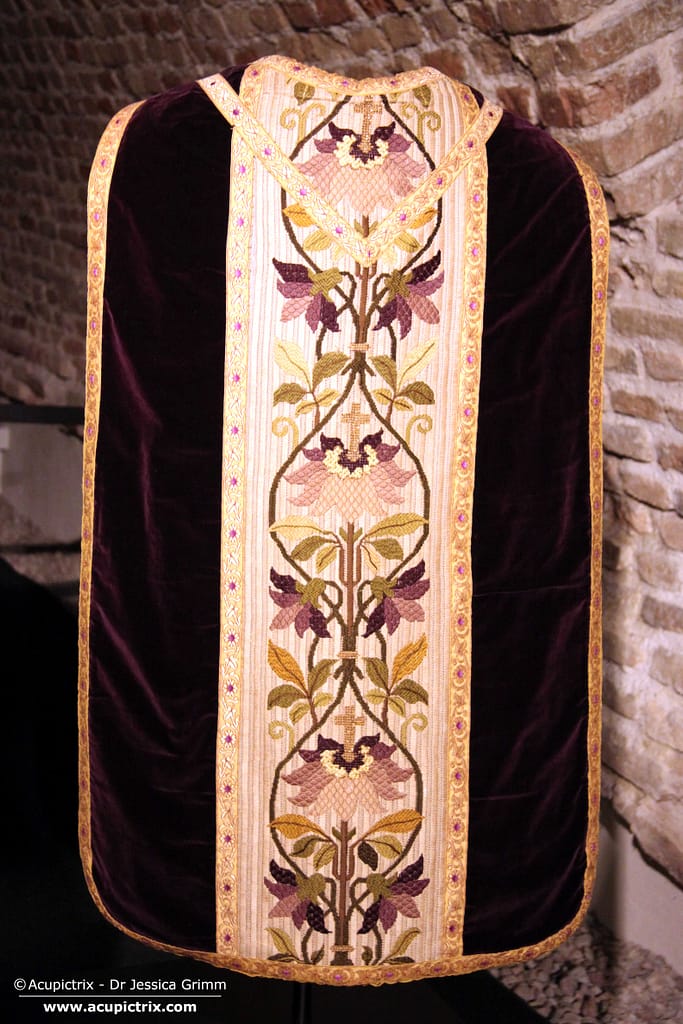
Above are two needlepoint vestments I encountered at an exhibition in the Church Heritage Museum in Vilnius in 2018. Let’s examine them in a bit more detail.
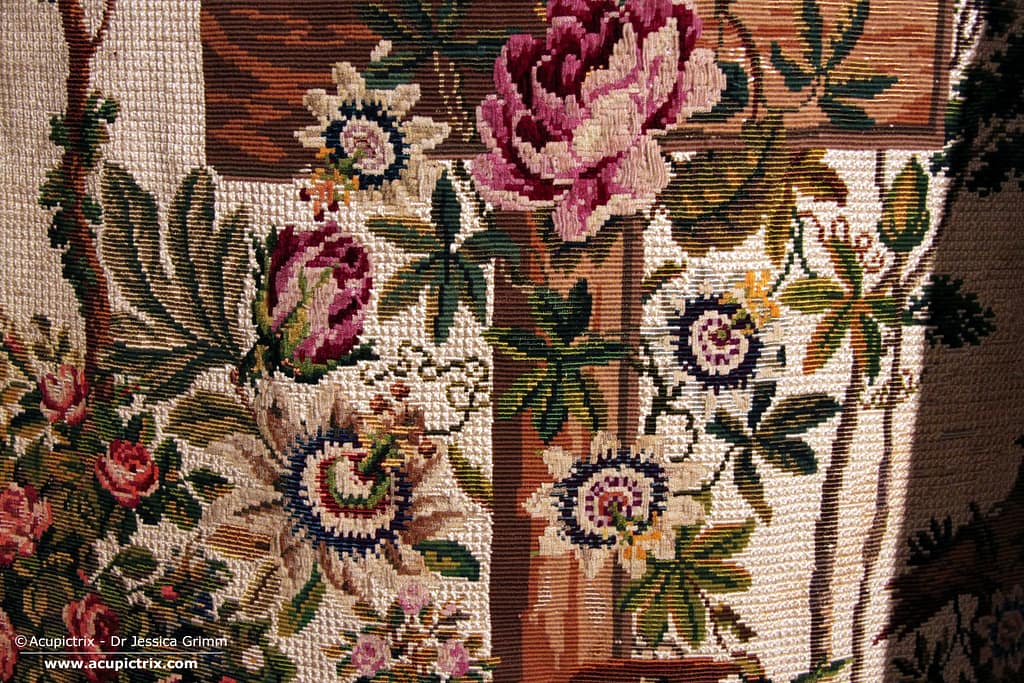
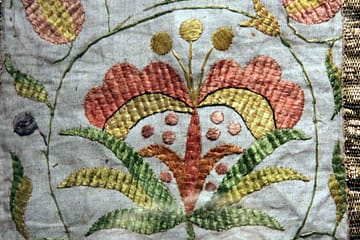
The embroidery on the above chasuble uses gobelin stitch in the cross and green leaves. The background consists of Smyrnas. It seems that the flowers are made with a different type of thread couched to imitate the gobelin stitch.
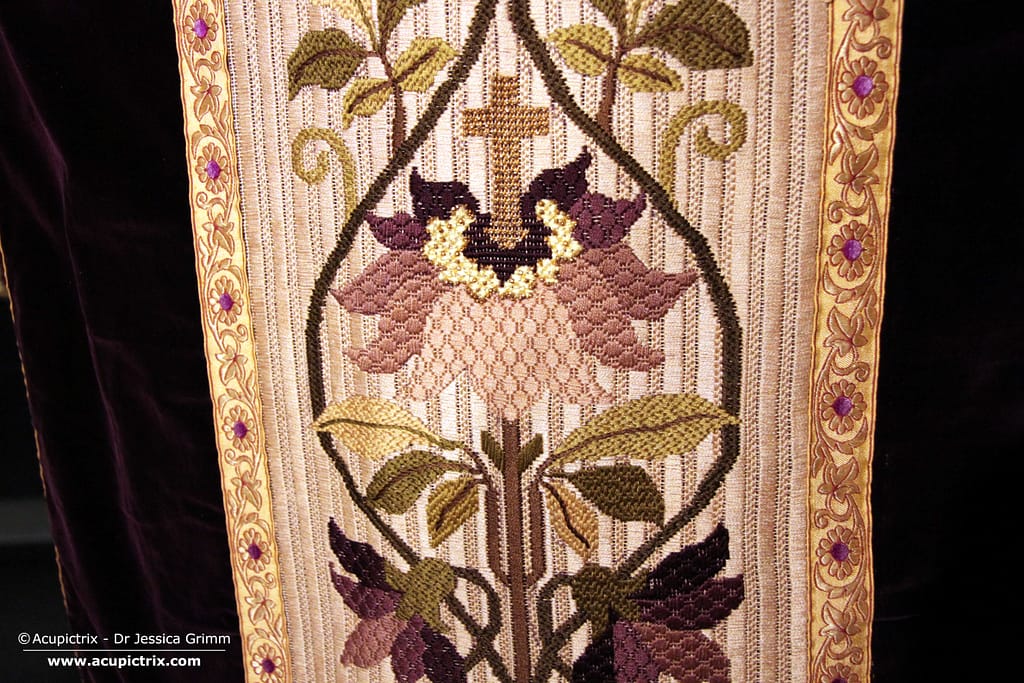
Here is a close-up of the other chasuble. If you zoom in, you can see the canvas threads where the embroiderer has used an open stitch to create a lace-like effect. This needlepoint embroidery also incorporates beads in the flower head and the cross.
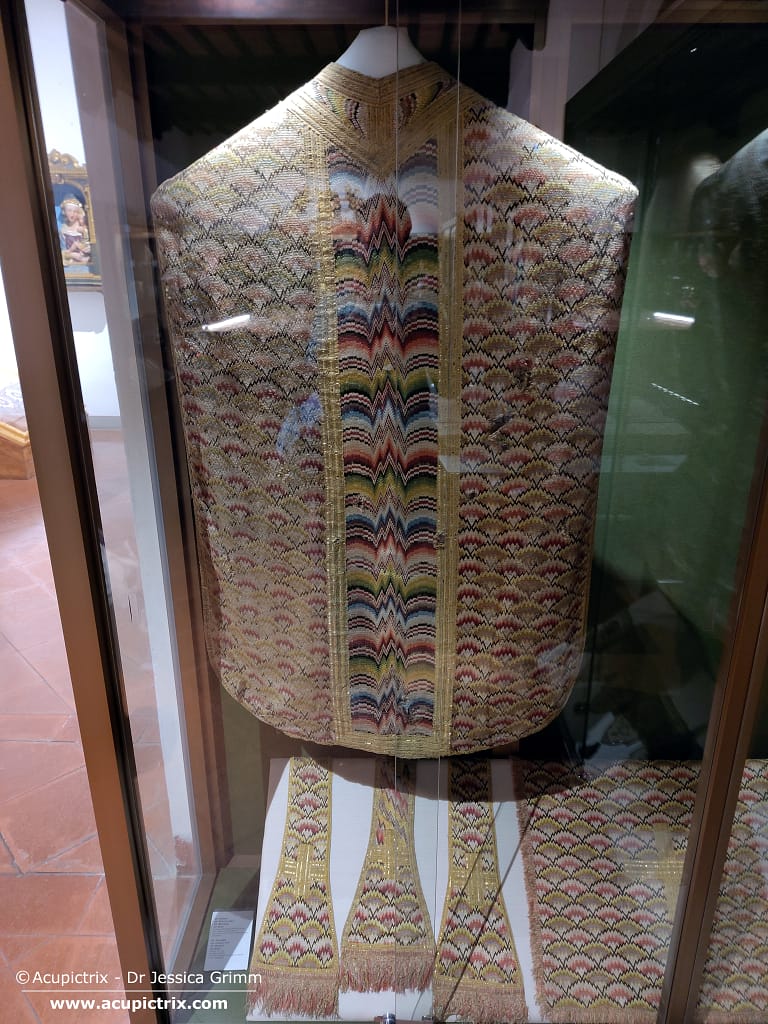

On my recent trip to Tuscany, I encountered a particularly fun set of needlepoint vestments made in Tuscany in the 18th century in the Museo d’Arte Sacra in San Gimignano. Although the whole surface of the vestments is filled with three different patterns, I love the bold central column on the back of the chasuble best. It reminds me of Bargello, sometimes also called Florentine stitch. The many bright colours somehow go together. And did you notice the sequence of these colours and how they alternate?
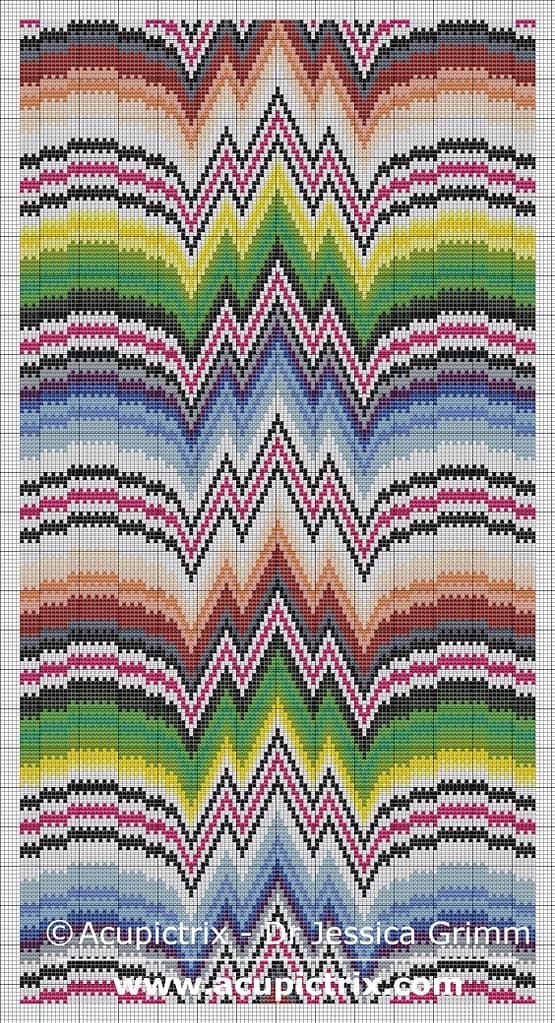
You can find a downloadable 9-page PDF of the chartered pattern in the membership part of this site.
0 Comments