The Stiftsmuseum Xanten, Germany, displays an unusually embroidered maniple (107.5 x 8 cm) dating to the second quarter of the 14th century. The maniple is made of red silk and displays seven scenes of the Passion. All-over embroidered maniples are rare. Usually, they consist of a strip of the same precious fabric as the other vestments, with minimal additional embroidery. Photographing the piece was a little difficult because it is currently displayed in a way that makes it difficult to photograph. You can download a PDF of the vestments in the permanent exhibition here (click on Paramente I und II). The PDF has additional pictures and a description of the maniple.
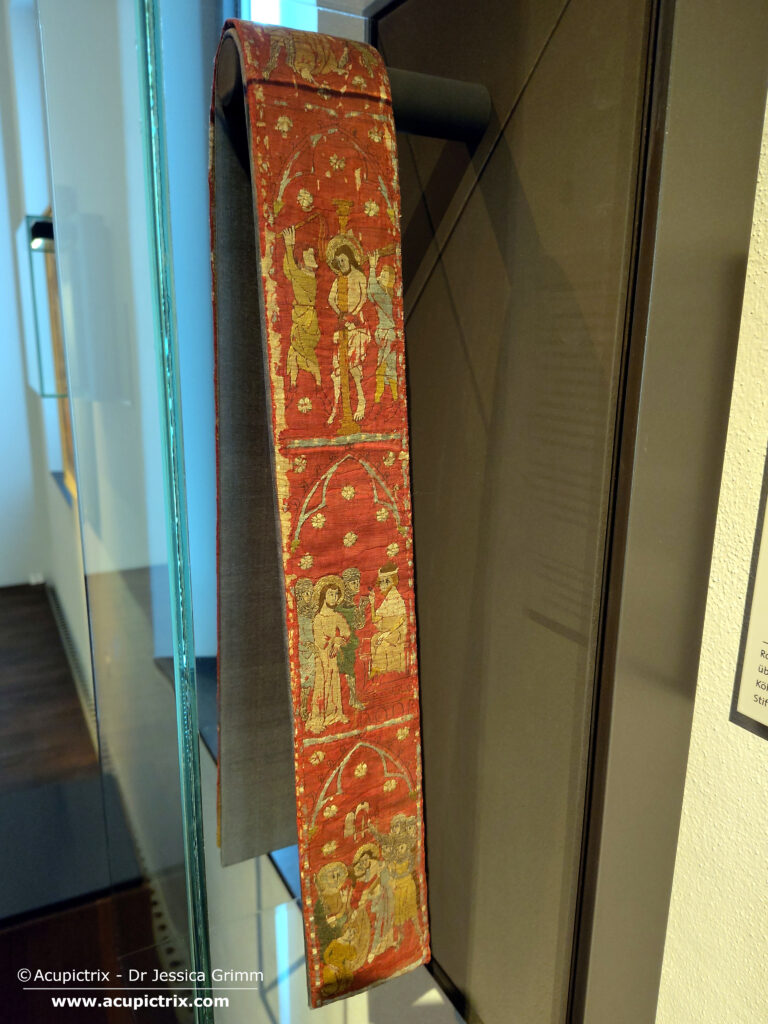
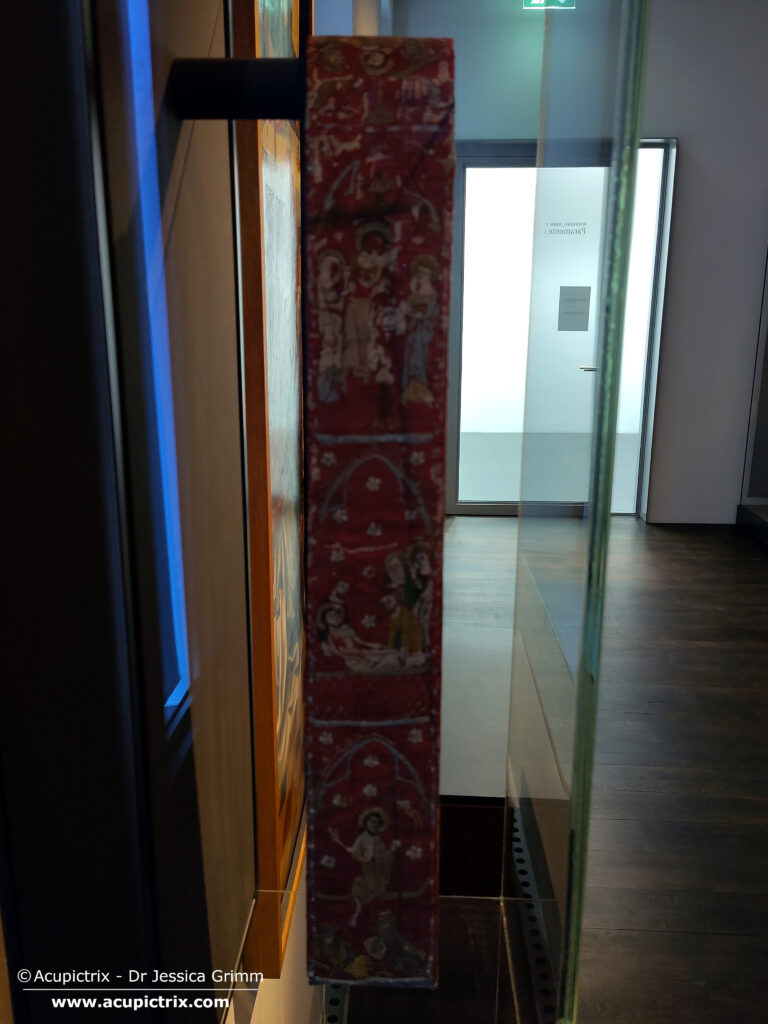
Starting on the bottom left, we see the Betrayal of Jesus, Jesus before Herod (or Pontius Pilate?), Flagellation, Jesus carrying the Cross, Crucifixion & Taking down from the Cross, Entombment and Resurrection. Each scene is placed under a delicate arch and separated from the next scene by a horizontal strip of stripey blue-and-white silk embroidery. The same stripey silk embroidery runs around the entire piece. Tiny (probably strawberry) flowers are powdered under and above the arches. This embellishment likely stems from the medieval fear of empty spaces or horror vacui. Additionally, strawberry flowers are associated with perfect goodness and innocence. Two attributes also associated with Jesus.
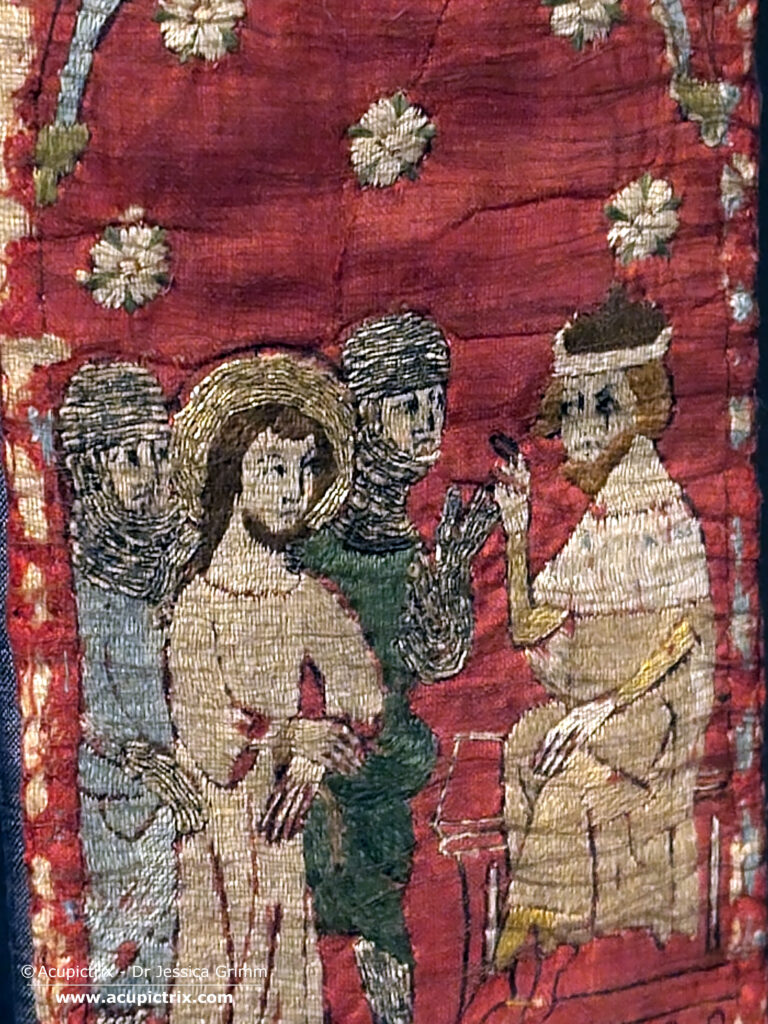
The embroidery on the maniple at the Stiftsmuseum Xanten mainly consists of silk embroidery with minimal addition of gold and silver threads. Pairs of metal threads follow the flow of the element being filled. The threads are couched in place in a bricking pattern.
The silk embroidery appears to be executed in split stitch. There is no shading. The folds of the clothing would once have been accentuated by black silk, now fallen out. Contrary to what we see in contemporary Opus anglicanum, the split stitches in the faces run strictly vertical and are not directional. This differs from the embroidery seen on the Kamper Antependium and the vestments at Burtscheid Abbey, which both show directional split stitching.
Another difference with the embroideries at Kamp and Burtscheid is that the embroidery on the maniple is stitched directly onto the red silk. And that silk is not backed with linen for extra stiffness. It is only lined with linen. Both at Kamp and at Burtscheid, the embroidery is executed on linen and then appliqued onto velvet and silk, respectively.
The above picture also shows the black ink lines of the design drawing. Based on the style, the art historians date the piece to the second quarter of the 14th century. They think the embroidery was made in Cologne, not far from Xanten. As the pieces from Kamp and Burtscheid were also made in Cologne, and the embroidery techniques differ between those and the maniple, this suggests that several different embroidery workshops operated in Cologne in the 14th century. Each with their own set of embroidery skills – some influenced by techniques seen in contemporary Opus anglicanum.
Literature
Grote, U., 1998. Der Schatz von St. Viktor: Mittelalterliche Kostbarkeiten aus dem Xantener Dom, 1. Aufl. ed. Schnell & Steiner, Regensburg.

0 Comments