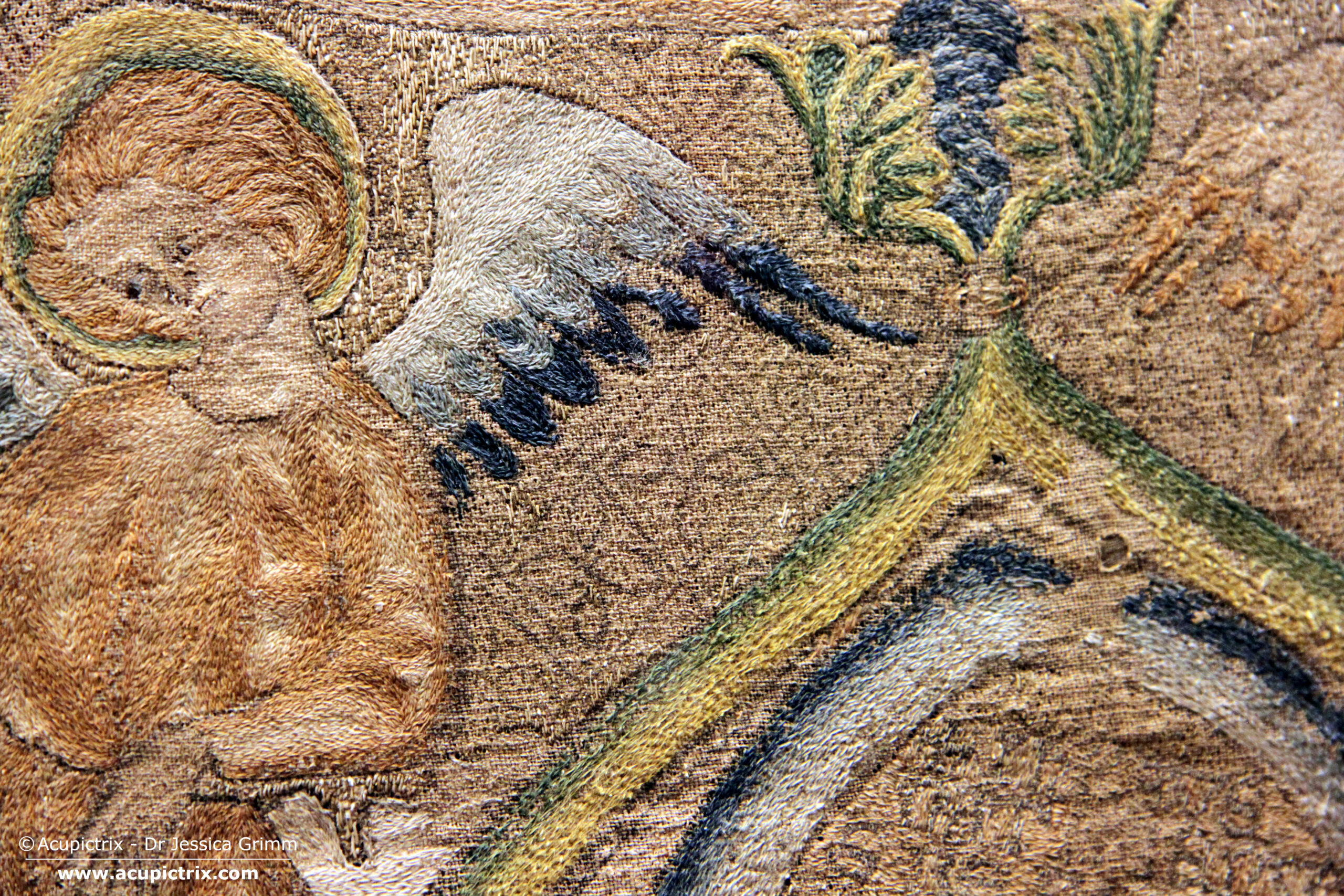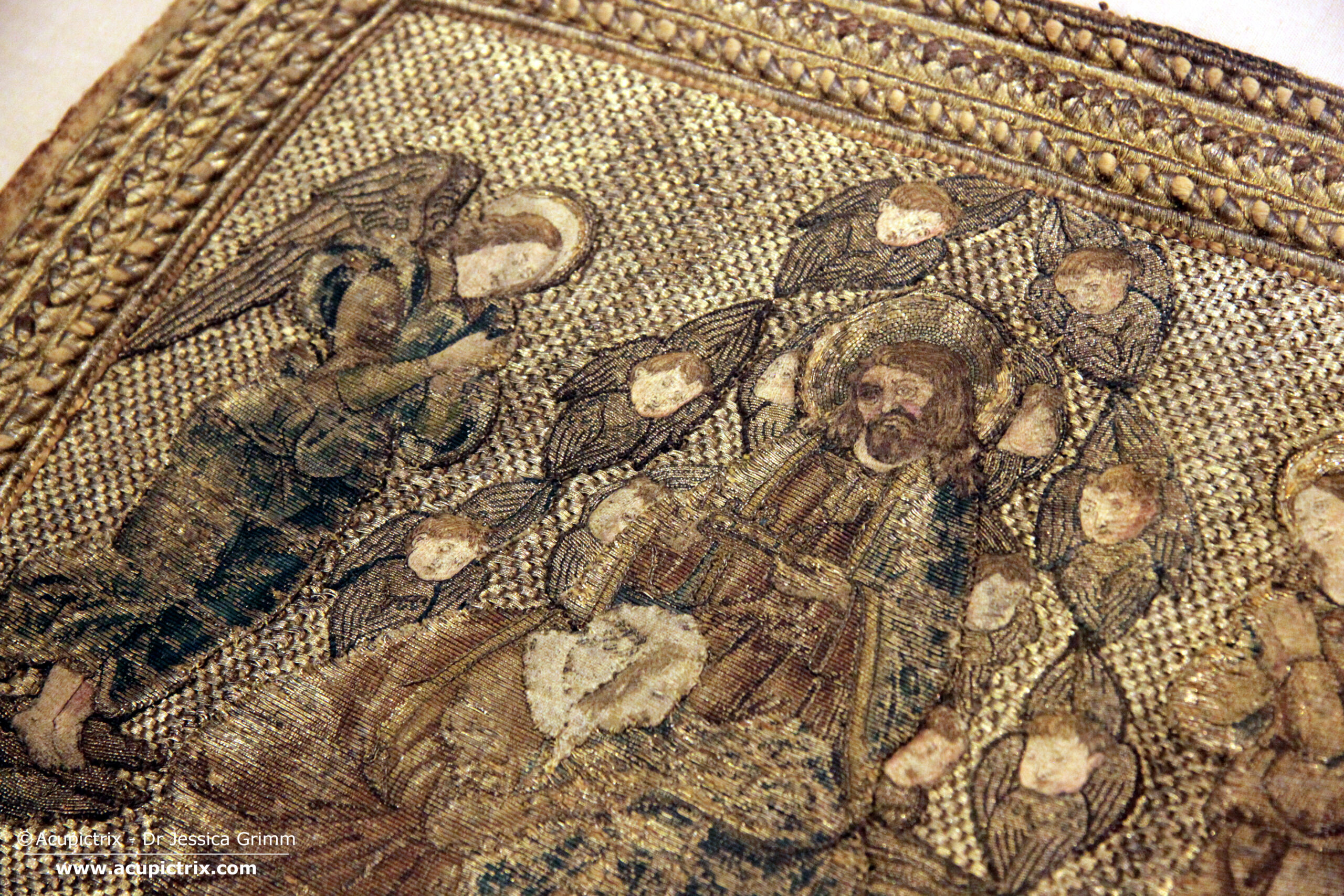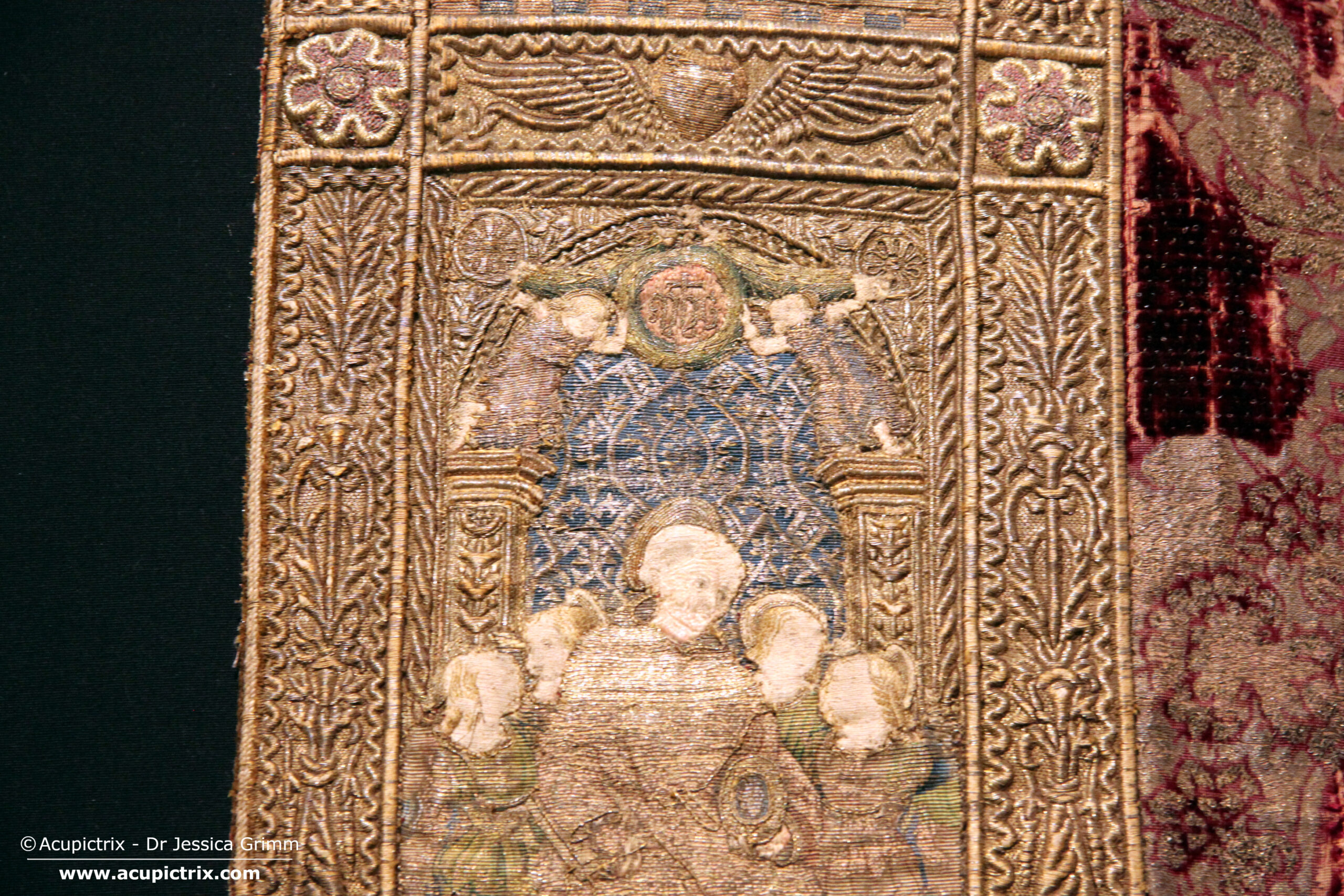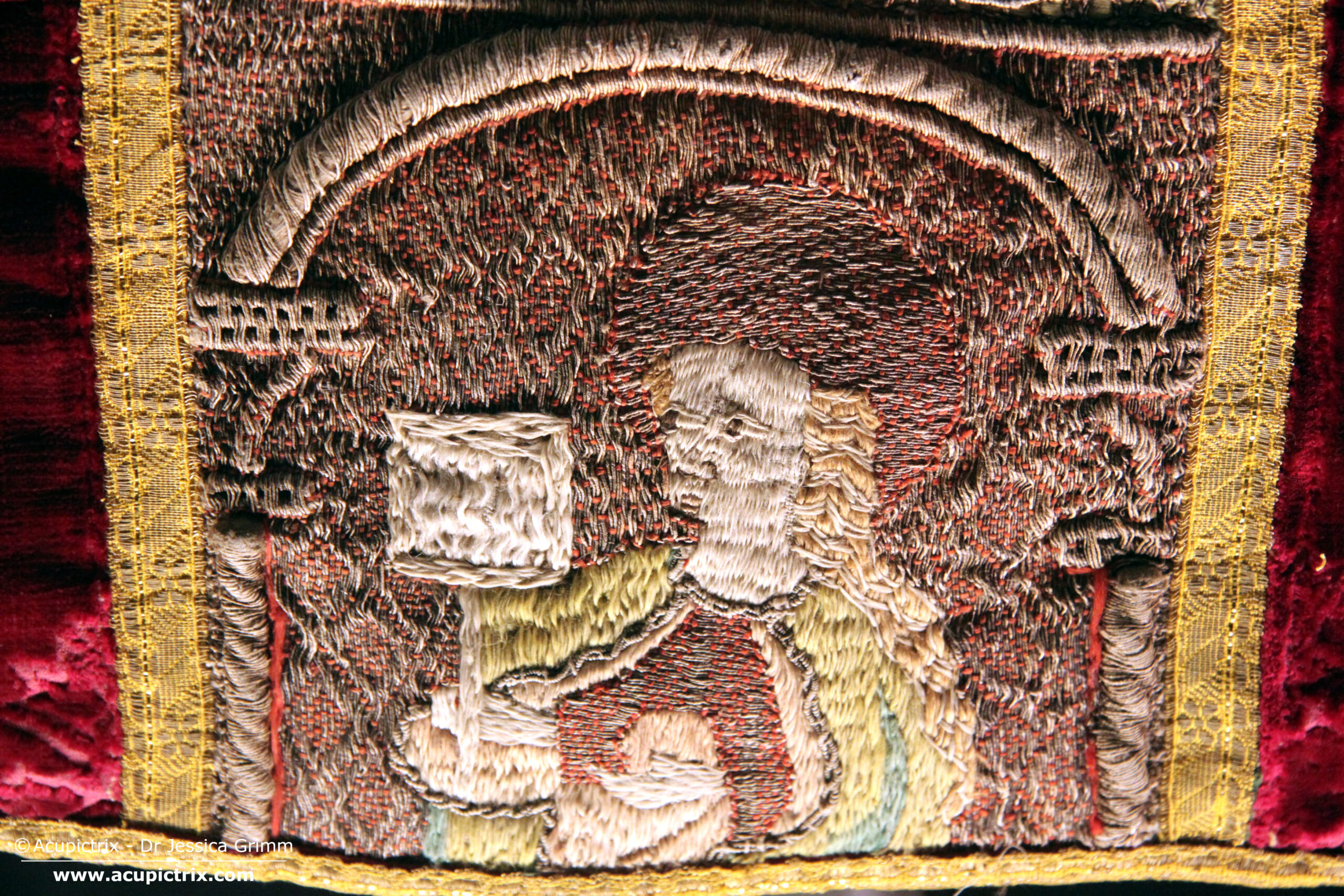
Medieval Goldwork Embroidery - Chasuble Saint'Anna d'Alfaedo (detail)

Medieval Goldwork Embroidery from Franconia, part II

Last week, we examined a medieval goldwork embroidery chasuble with two different types of stumpwork, dating to the first half of the 15th century and made in the Franconia region of Germany. This week, I have another lovely chasuble for you that also displays medieval goldwork embroidery from two older vestments. You can see the entry for this chasuble on BEWEB, the Italian website for historic and artistic heritage. Many medieval vestments in Italy are Read more
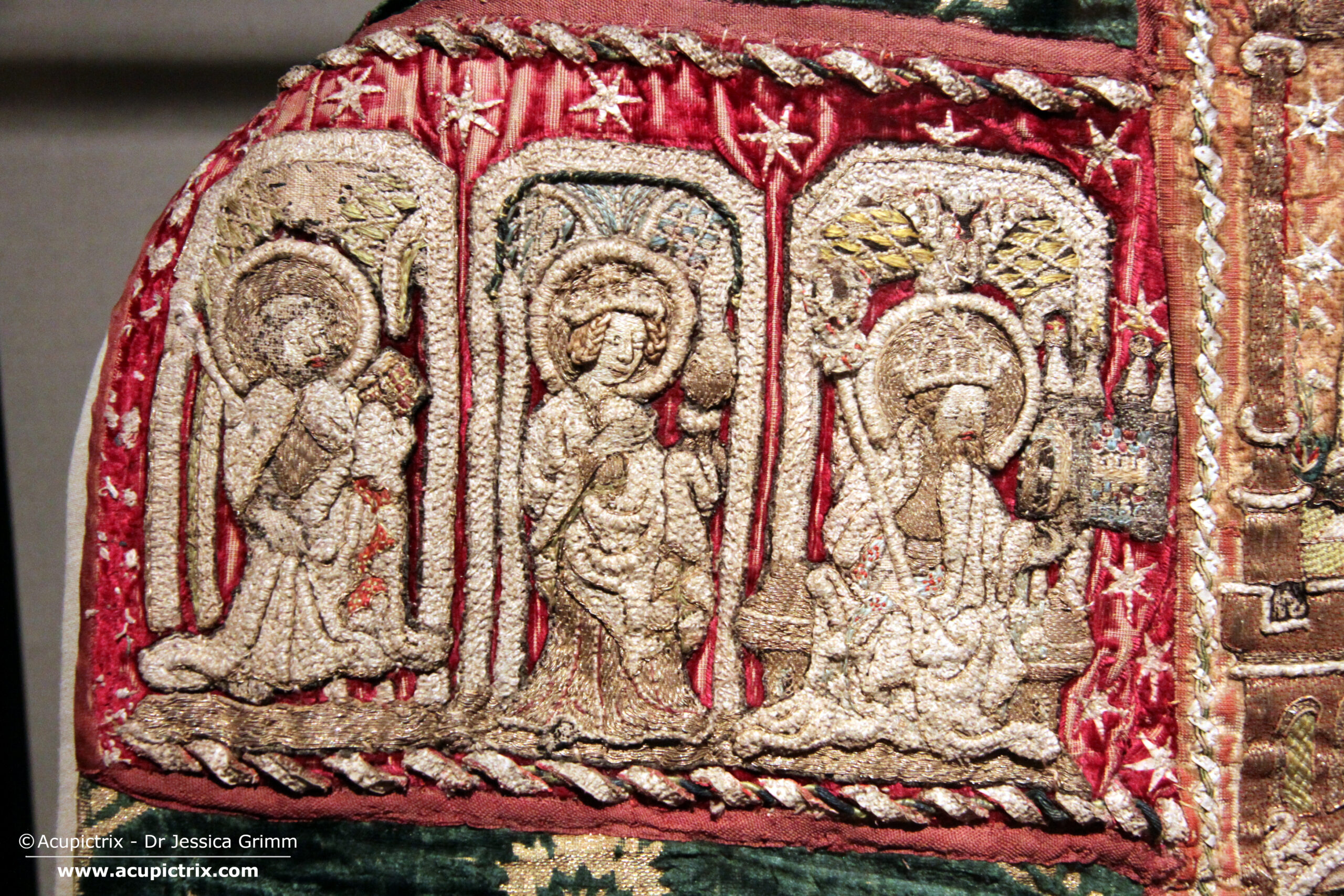

Medieval Goldwork Embroidery - Chasuble from Bamberg.

Medieval Goldwork Embroidery from Franconia, part I

In the past months, we have examined medieval goldwork embroidery centres in Italy and England. This month, we will explore medieval goldwork embroidery made in the Franconia Region in Germany, which lies just south of the centre of Germany. Important cities include Nuremberg, Würzburg, Bamberg, Bayreuth, Ansbach, Coburg, Meiningen and Schwäbisch Hall. As far as I know, there is no literature on medieval embroiderers or the guilds they belonged to from these towns. We do Read more

Historical Embroidery . Screenshot Acupictrix Discourse Forum

Historical Embroidery: building a Community

For my Pienza Cope giveaway, I asked my Patreon patrons what content they really enjoyed on my page or what suggestions they might have for future content. Overall, they are very happy with what is on offer—terrific! However, some suggested starting a Forum, hosting Stitch & Chats, or doing a SAL. In other words, they seek ways to connect with others in the historical embroidery community. As I live in an embroidery desert, I am Read more

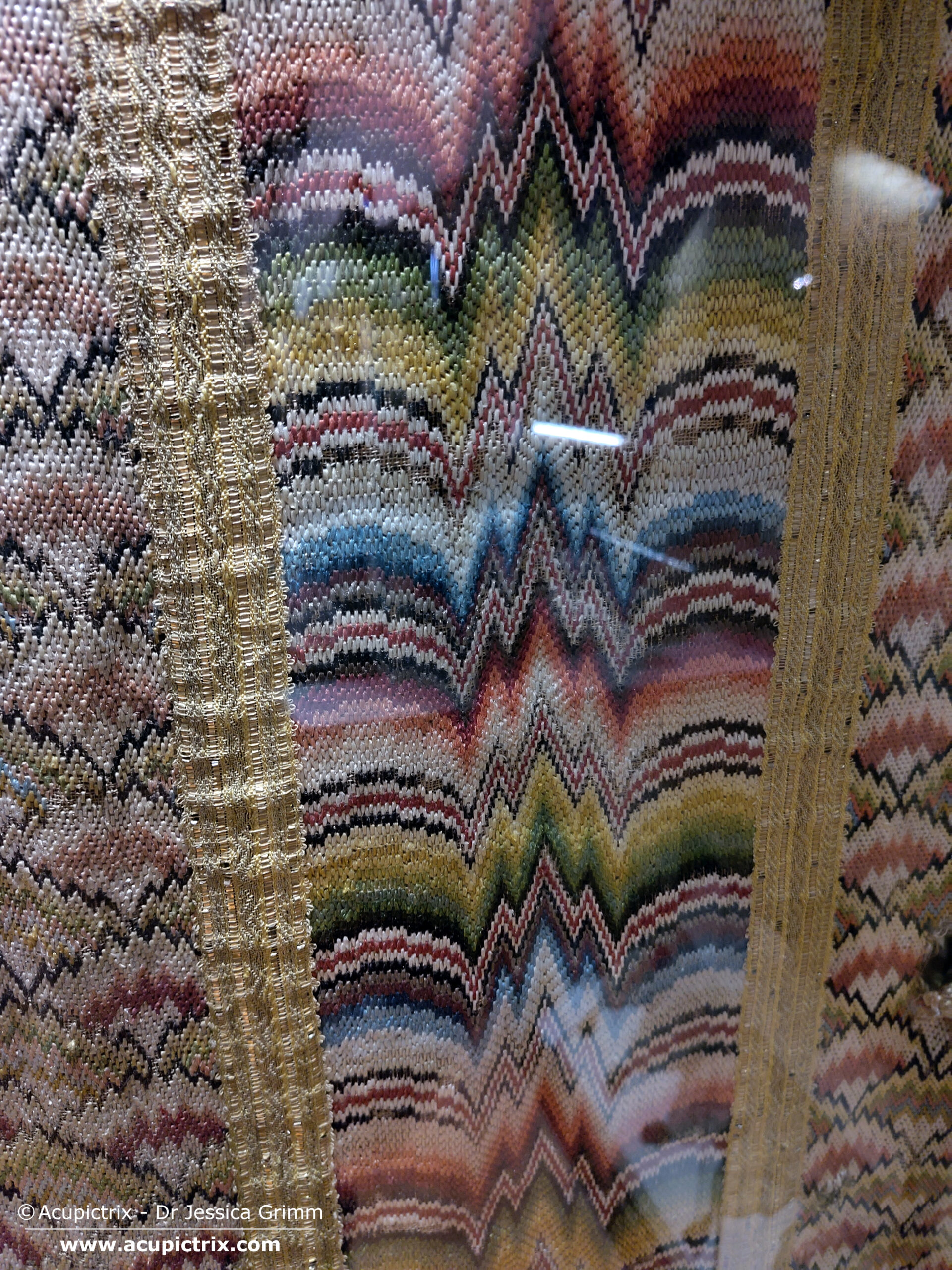
Bargello chasuble detail.

Needlepoint Vestments from the 18th-20th century

Although my interest is primarily medieval goldwork, I have encountered a lot of younger embroidery in my research. Some of it is rather fun, like the needlepoint vestments seen in the 18th, 19th, and 20th centuries. Geometric, floral and figural scenes are worked on canvas with cross-stitches, tent stitches, and other typical needlepoint stitches. The designs are often quite bold, and the colour choices are striking. These needlepoint vestments show that whatever type of embroidery Read more

Opus anglicanum - Bologna cope detail

Opus anglicanum: the early 14th century Bologna Cope

Last year, I spent many delightful hours studying the Bologna Cope at the Museo Civico Medievale in Bologna, Italy. This Opus anglicanum cope was made in England between AD 1310 and 1320. The cope was also displayed at the epic Opus anglicanum exhibition in the V&A in 2016/2017. Although the cope is missing its hood, morse and orphreys, it measures an impressive 149 x 326 cm. Instead of being embroidered on an expensive silk fabric, Read more

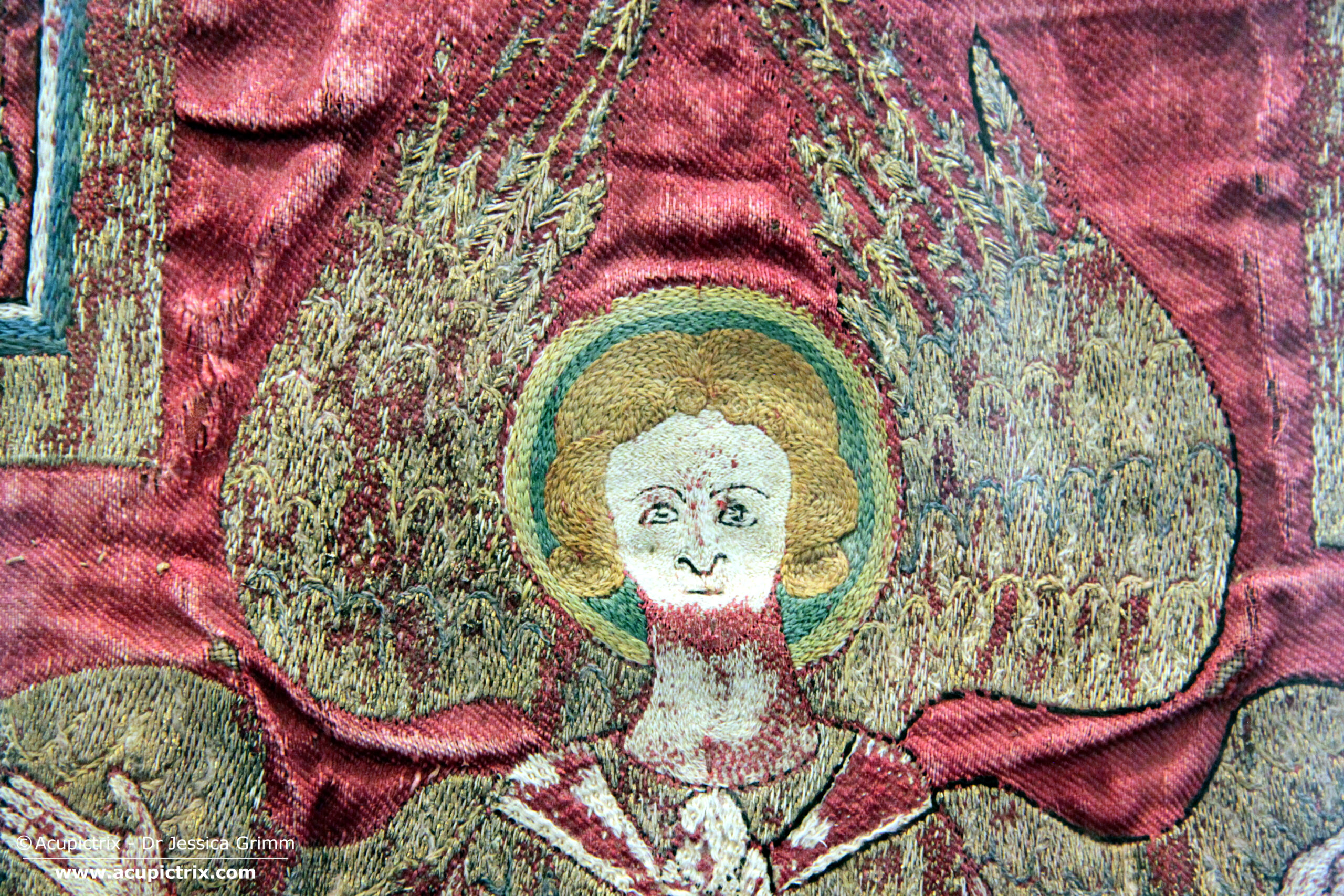
Opus anglicanum - Detail of a seraph on the Vatican Cope.

Opus anglicanum: the late 13th century Vatican Cope

Several Italian museums hold Opus anglicanum embroidered vestments. On the one hand, this is a testament to Opus anglicanum being hugely popular with European clergy in the 13th and 14th centuries. However, it was also the result of the Italians remaining Catholic and England going through the destructions of the Reformation. Some of these splendidly embroidered Opus anglicanum copes returned to London in 2016/2017 for the Opus anglicanum exhibition at the Victoria & Albert Museum. Read more

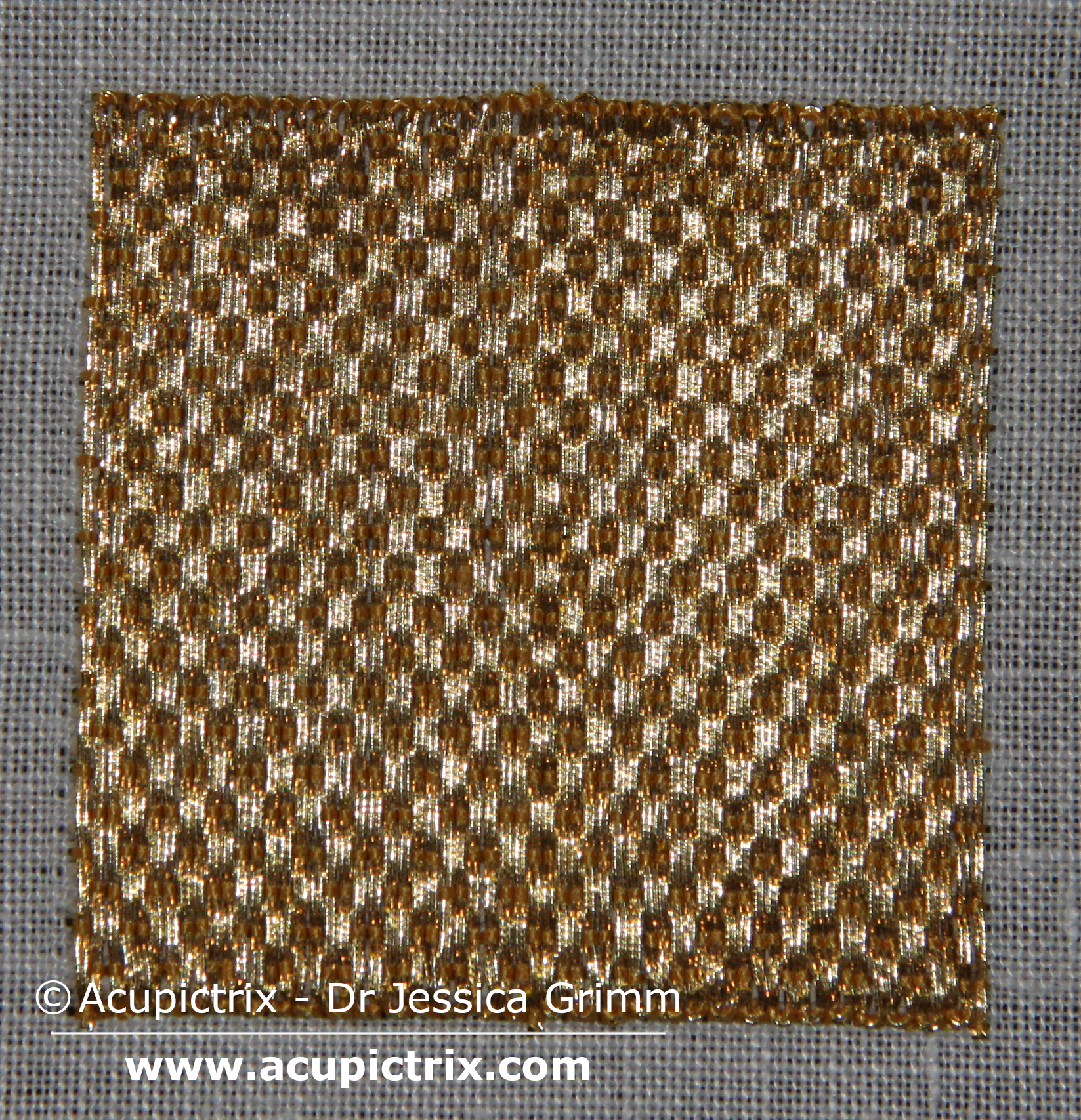
Goldwork Tutorial - padded bricking sample

Goldwork Tutorial: Padded Brick Couching inspired by Tuscany

This goldwork tutorial shows you how to make a simple padded background for your goldwork or stumpwork embroidery. We saw this technique on the cope hood from Tuscany made in the first quarter of the 16th century. The method produces a nicely textured and firm background. It would look lovely with a stumpwork flower, butterfly or leaf on top. As always, my Journeyman and Master Patrons will find a downloadable PDF of this tutorial on Read more

Medieval Goldwork from Tuscany: stunning orphreys

We continue our exploration of medieval goldwork from Tuscany with a couple of stunning orphreys. One is kept in a museum, one in a Cathedral, and the third is in a private collection. In 2019, they were displayed side by side in Castello Buonconsiglio. All three are of exceptional quality, both in design and embroidery skills. They are so similar that they clearly belong to the same production centre. Let me introduce you to Saint Read more

Medieval Goldwork from Tuscany - cope hood with the Coronation of the Virgin

Medieval Goldwork from Tuscany: the Coronation of the Virgin

Last week, we examined the vestments made for Pope Nicholas V. Today, we continue our explorations of medieval goldwork from Tuscany, Italy with a cope hood made in Florence in the first quarter of the 16th century. The design of the Coronation of the Virgin is attributed to Sandro Botticelli (AD 1445-1510). Whether this means that the embroiderer was given a design by Botticelli or that a talented draughtsman copied a design by Botticelli will Read more

Medieval Goldwork from Tuscany: Pope Nicholas V vestments

This month, we will examine medieval goldwork from Tuscany, Italy. I was fortunate enough to see many of these pieces when they were exhibited at Castello Buonconsiglio in 2019. The series of blog posts is also in preparation for a trip to Tuscany that my husband and I hope to make next month. We’ll kick off the series with the magnificent vestments made for Pope Nicholas V (AD 1397-1455). You can continue your explorations with Read more