Slate Frame Review + Giveaway: Freedom Frame by the Artful Fox

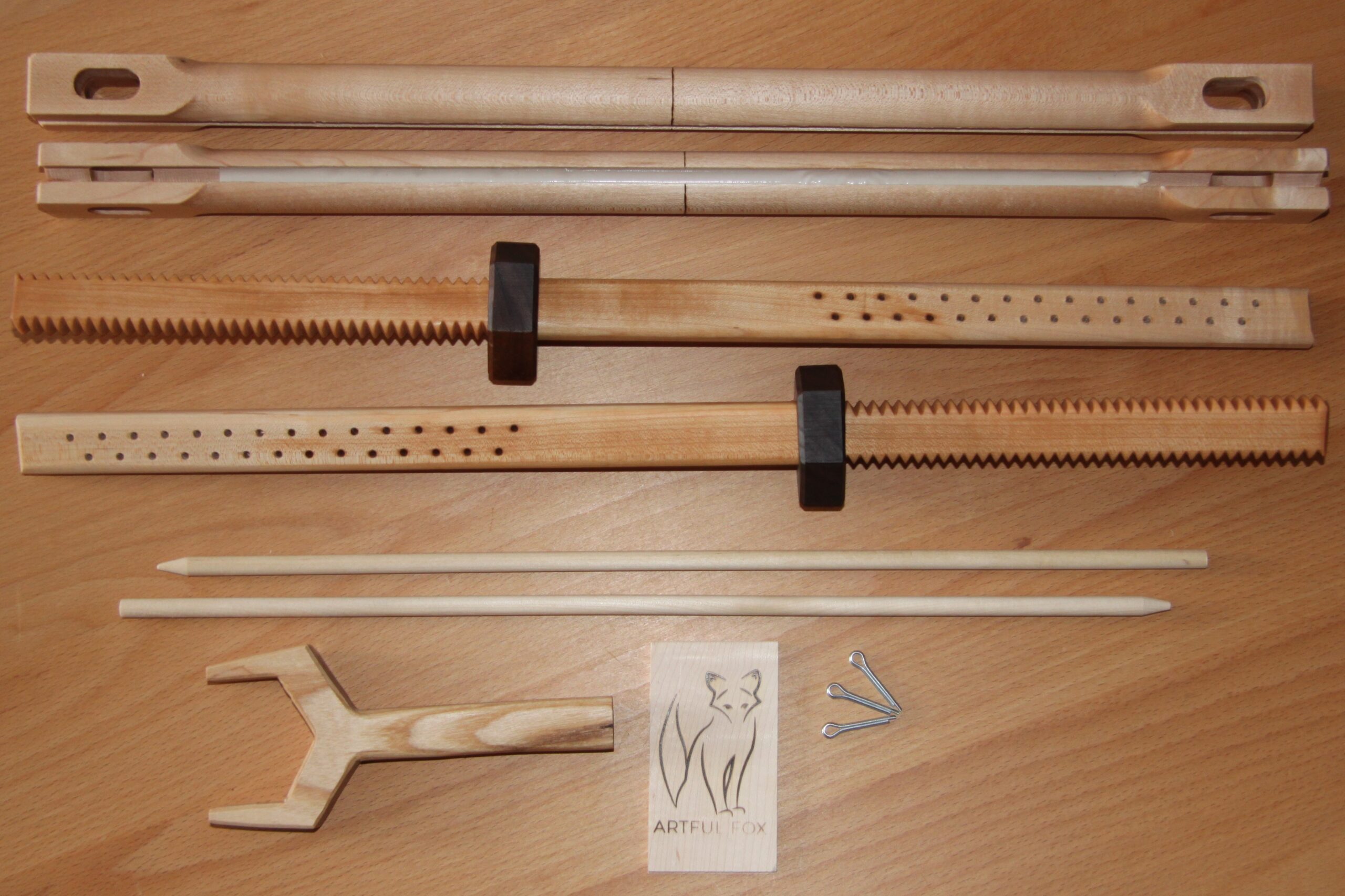
Late last year, the owners of the Artful Fox approached me to review their Freedom Frame. They promise that this slate frame can be dressed within three minutes. It is one of these no-sew slate frames that operate with a slot and dowel system. They sent me the 15-inch frame, which costs $205 + shipping. Converted at the Royal School of Needlework in 2010 from a strictly in-the-hand embroiderer, I greatly advocate using a slate Read more
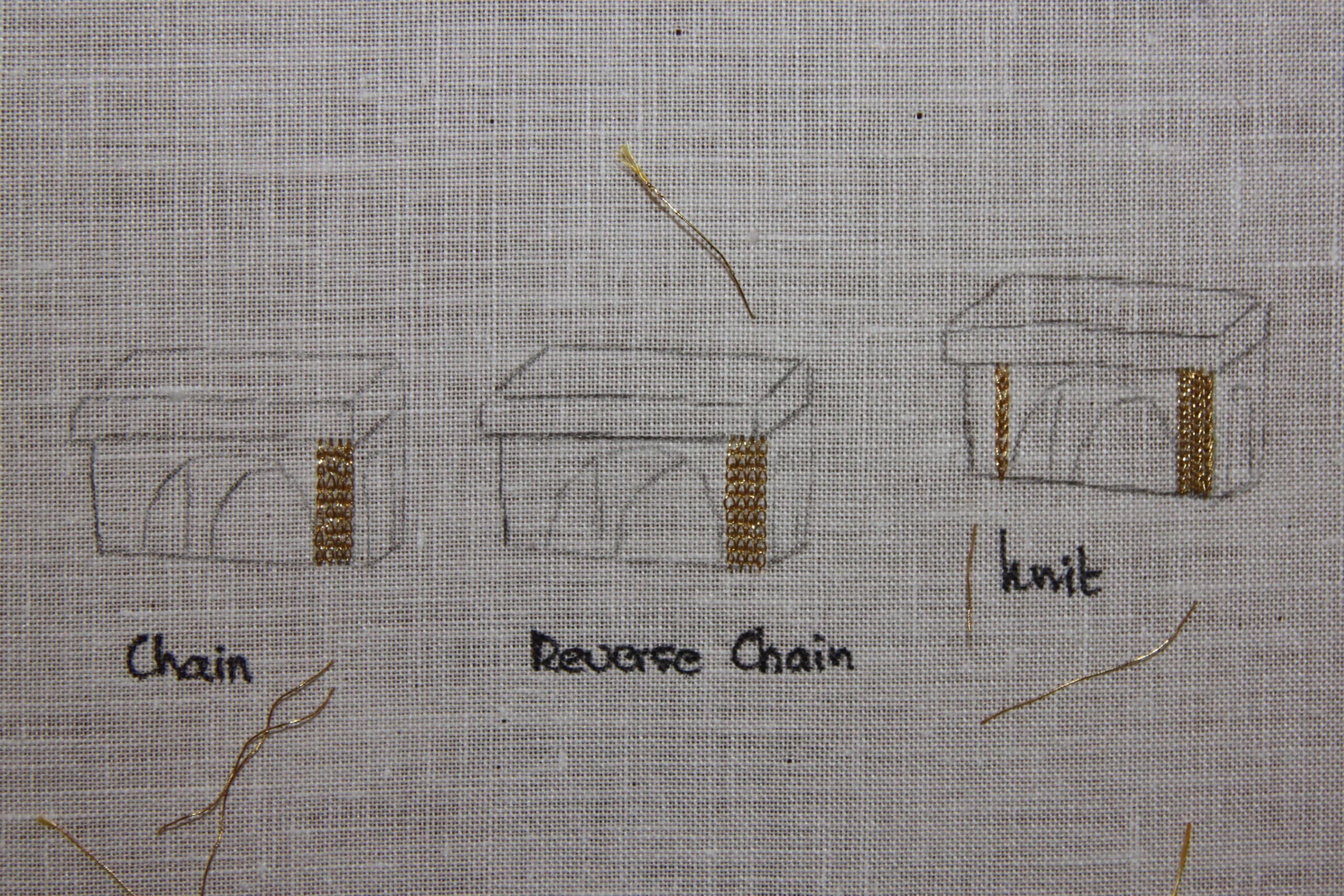
Embroidery stitch identification - Embroidery samples showing different embroidery stitches made with the same gold thread.

Which embroidery stitch is it? Stitch identification.

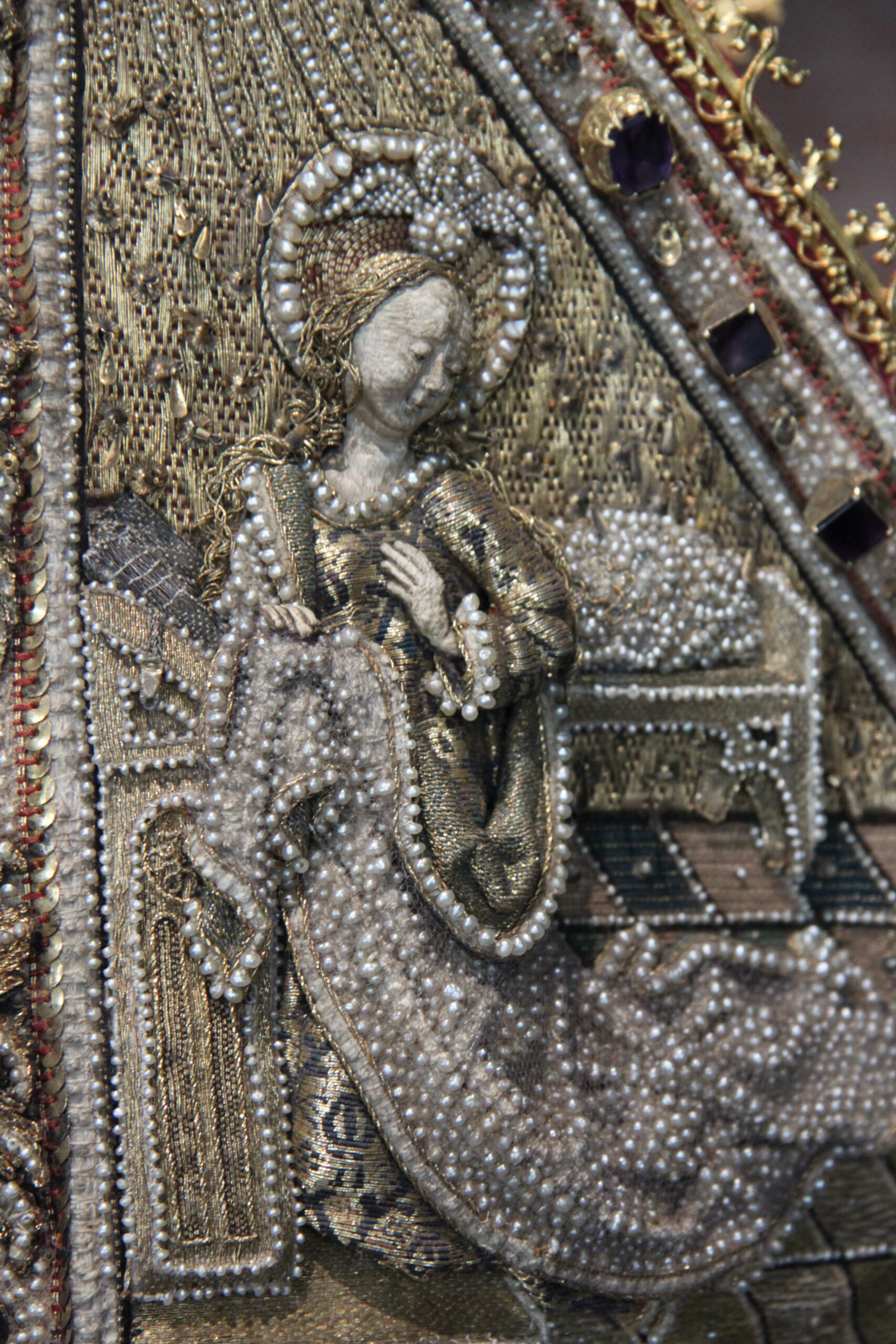
Identifying an embroidery stitch correctly on a historic piece is not always easy. As inspecting the back for correct identification is often necessary, historic embroideries can be challenging. Either the back cannot be checked due to a lining or is displayed, so it is inaccessible. The solution? Make embroidery samples and compare them with the original! One such piece is the ornate pearl and stumpwork mitre, made for the Sainte Chapelle in Paris, that I Read more

Pearl-embroidered mitre made by Hans Plock, c. AD 1514, Halle, Germany

Pearl-embroidered mitre made by Hans Plock (c. AD 1514)

Last week and the week before, we looked at beautifully pearl-embroidered mitres from Italy and France. Today, we will look at probably the most spectacular pearl-embroidered mitre of them all: the mitre made by Hans Plock for Cardinal Albert of Brandenburg in AD 1514 in Halle, Germany. The piece is permanently displayed at the Rüstkammer in Dresden, Germany (Inv. Nr. i. 0086). Apart from the outstanding embroidery, the real treat is that we know quite Read more

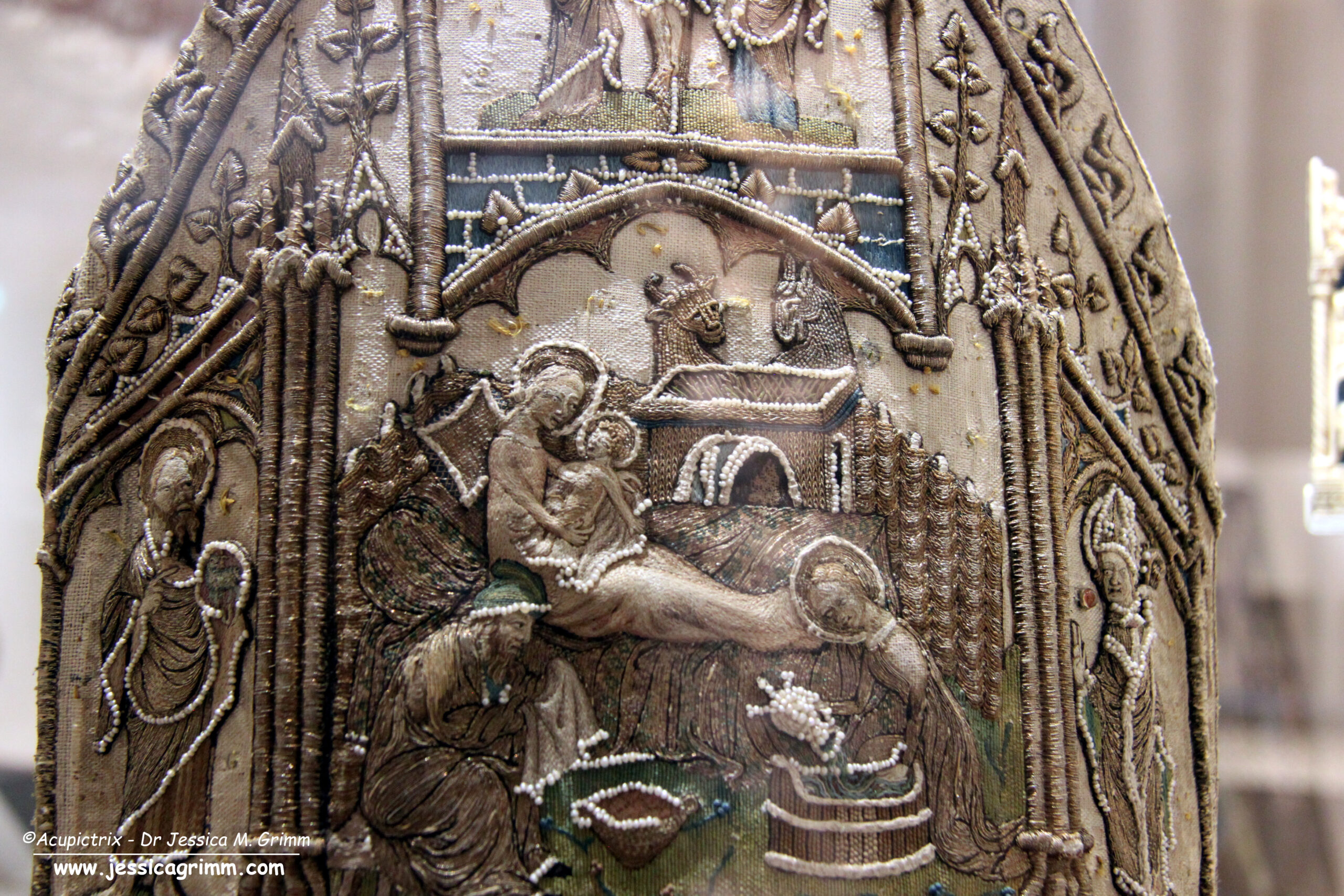
Pearl-embroidered mitre from Sainte-Chapelle showing the Nativity.

Pearl-embroidered mitre of Sainte-Chapelle, Paris (France)

Last week, we looked at the pearl-embroidered mitre of St Isidoro, which dates to the second quarter of the 14th-century. Today’s pearl-embroidered mitre is slightly younger and dates to the last quarter of the 14th-century and was likely made in Paris. It was once housed in Sainte-Chapelle, the 13th-century royal chapel in the heart of Paris (France). I was fortunate to see the mitre at the 2020 embroidery exhibition in Musée Cluny. The embroidery is Read more

Pearl-embroidered mitre from the 14th century,

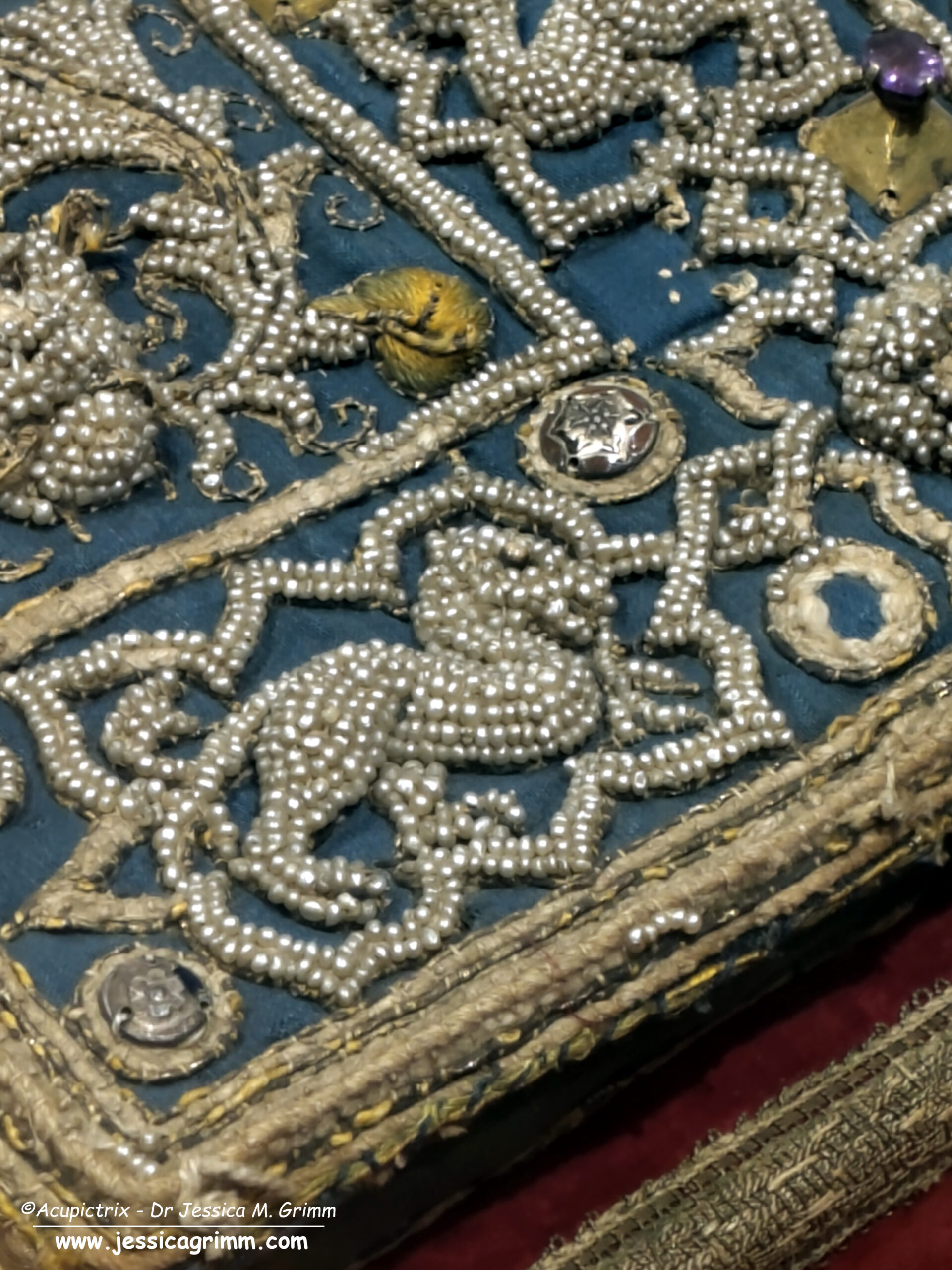
Pearl-embroidered mitre of Saint Isidoro, Bologna (Italy)

The Saint Stefano church, one of the churches of the seven-churches complex in Bologna, houses a spectacular pearl-embroidered mitre from the second quarter of the 14th century. The iconography is not your average Christian fare with dragons, birds, and lion masks amidst foliage. It is, in fact, so rare that no comparable pieces are known. The sumptuous embroidery mainly consists of fresh-water pearls, simple silk shading, couched gold thread and precious stones. As the embroidery Read more

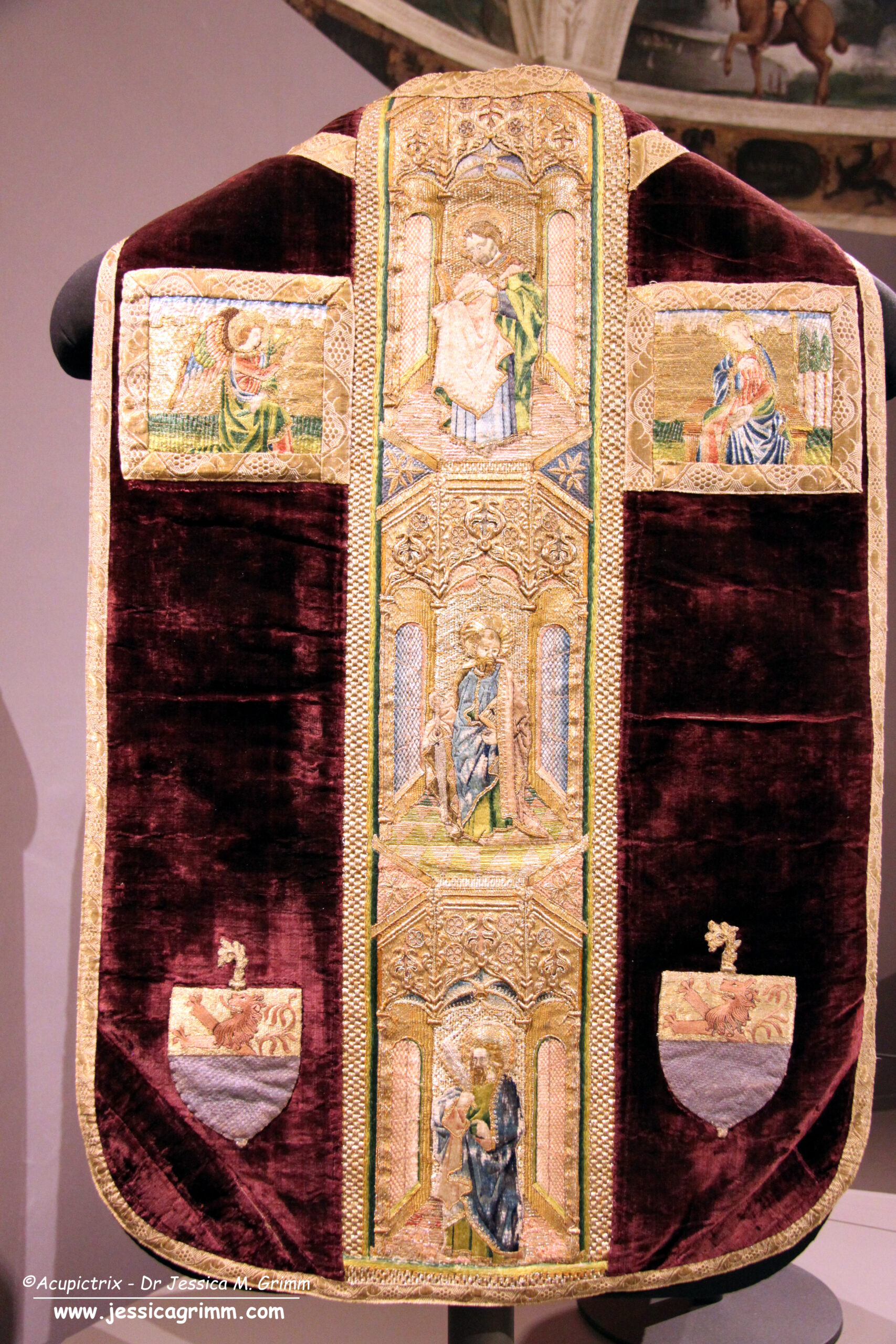
Back of the DePrez chasuble kept at Aosta Cathedral, Italy.

Aosta Cathedral, Italy: A 15th century embroidered chasuble

By now, you probably know that chasing embroidered medieval vestments is kinda my thing :). Although I am fortunate enough to be able to travel regularly, a lot of my research happens behind a computer screen. Trailing through publications, especially the literature references, is how I find new-to-me pieces. And related information to these pieces. When I re-read the catalogue entry for a chasuble from Aosta Cathedral, Italy, that featured in my Advent Calendar, I Read more

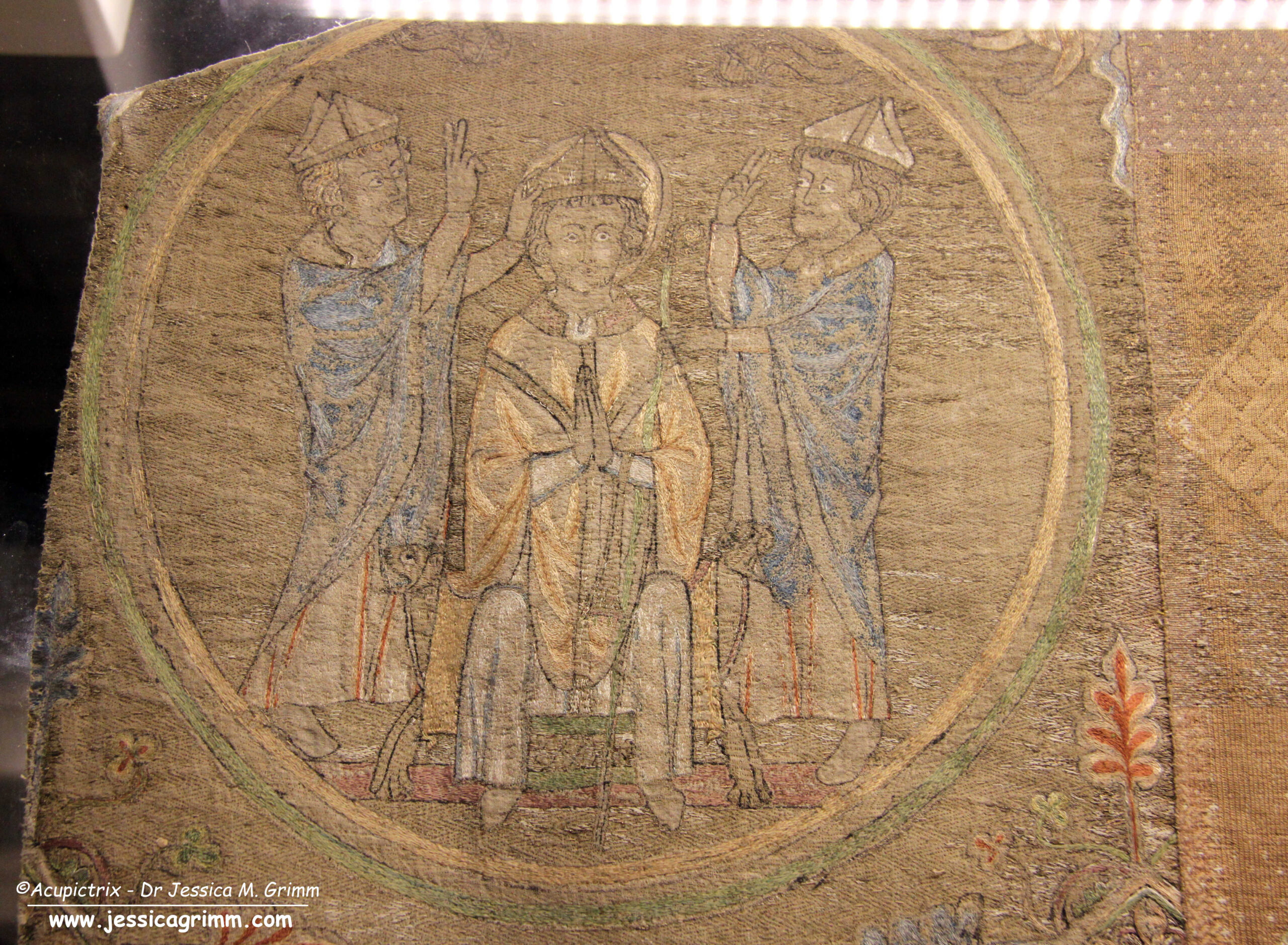
Opus anglicanum embroidery showing St Nicholas being crowned bishop.

Opus anglicanum: St Nicholas Dalmatic

A couple of weeks ago, I was fortunate enough to finally visit the Cathedral Treasury of Anagni near Rome, Italy. The treasury houses several pieces of Opus anglicanum, not only the namesake cope. One of these pieces is the chasuble, which you can see below. However, this vestment started life as a dalmatic. It was made in the last third of the 13th century, either in England or in France. It was likely gifted to Read more

Slate Frame with goldwork embroidery and medieval embroidery tools.

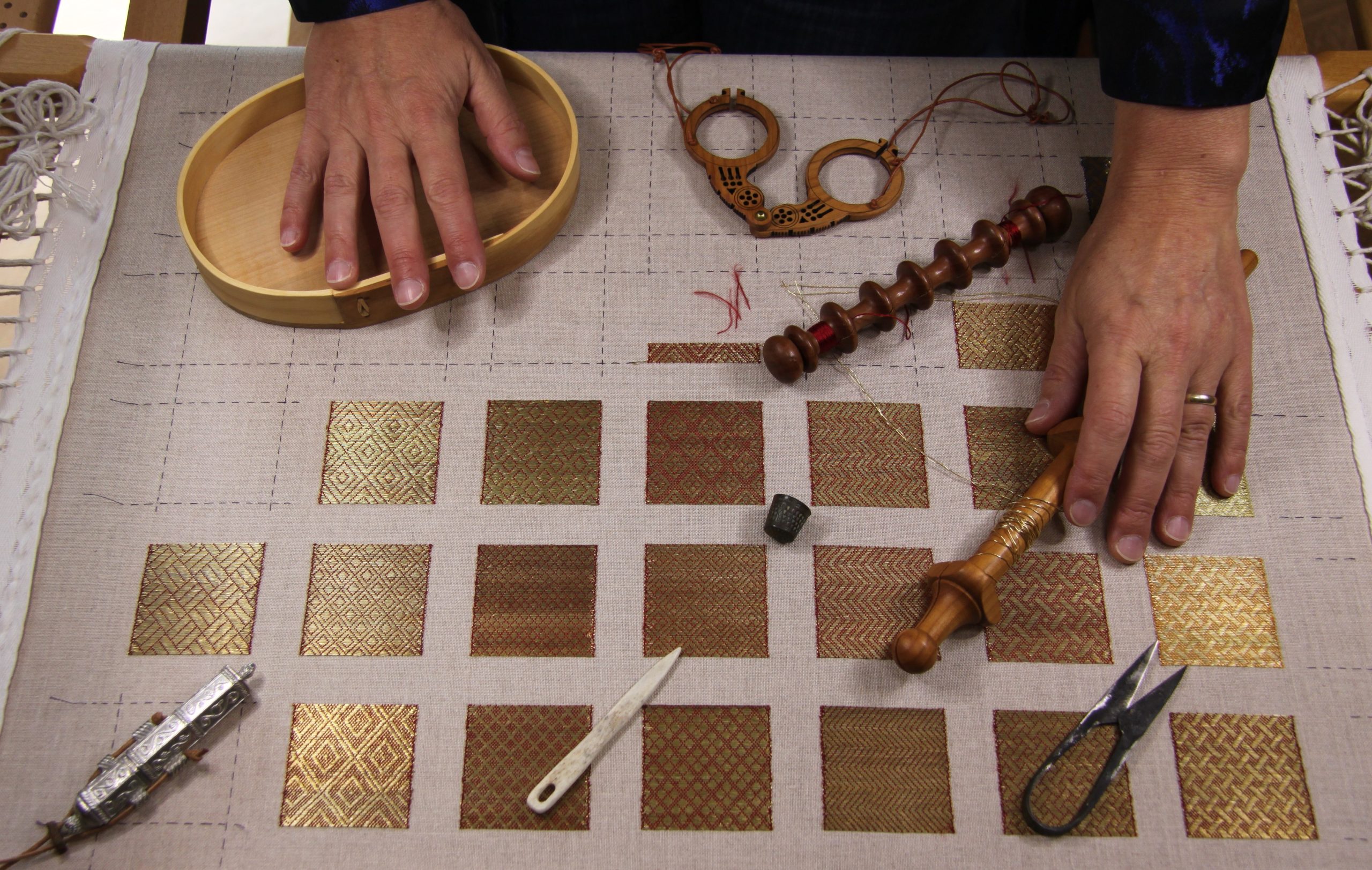
Tutorial: Diaper Pattern Couching

When I demonstrate diaper pattern couching, people always ask if I have the complete pattern in my head somehow as there is nothing drawn or printed on the fabric. And even with my explanation, people don’t always fully understand how it is done. Not even embroiderers familiar with cross-stitch embroidery. And those embroiderers who know how it is done, are not always comfortable working a new pattern as they have trouble ‘reading’ the notation on Read more

Hand-made illumination of a medieval lady embroidering.

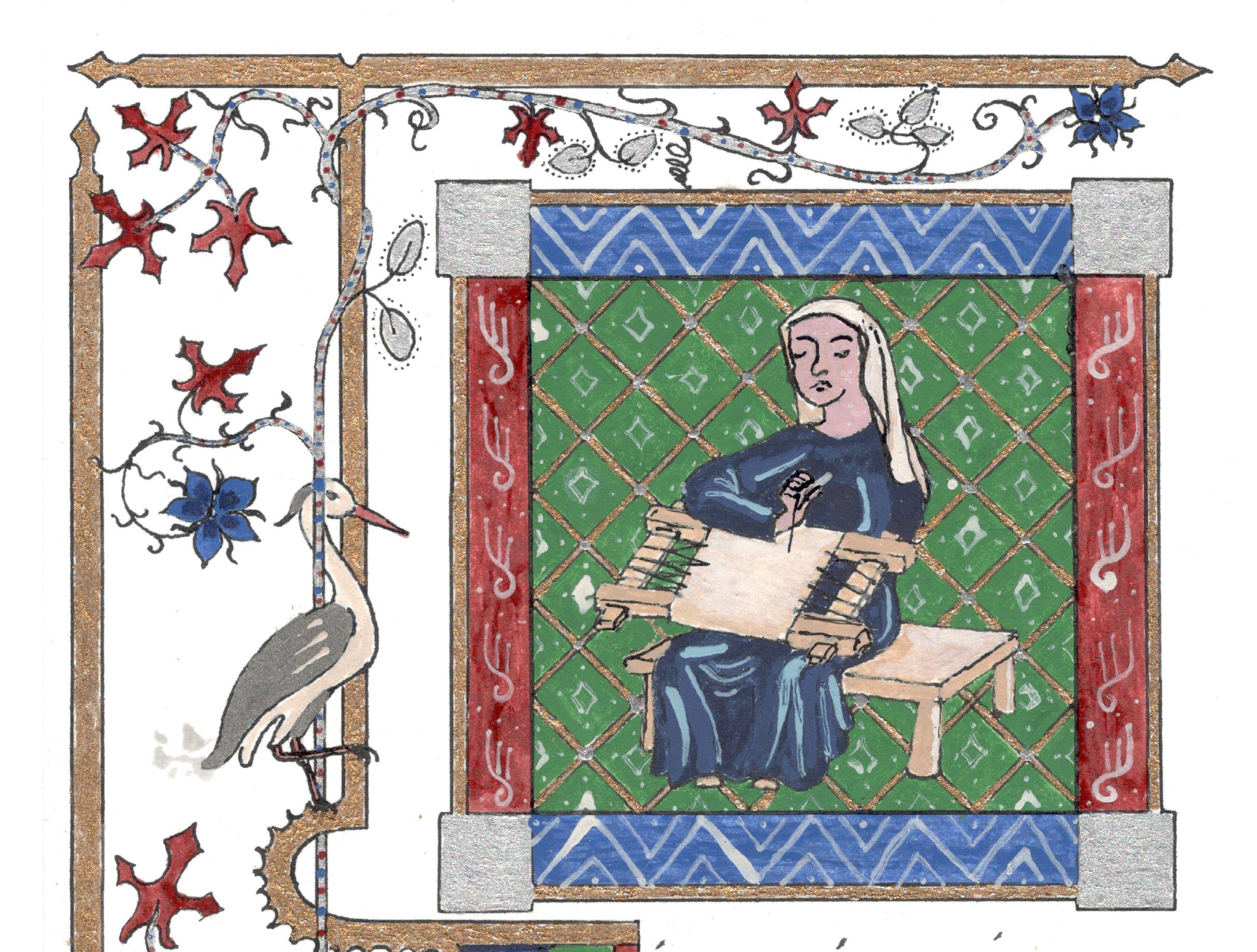
Late Medieval Embroidery Guilds in the Low Countries

In the 80s, we had an art historian in the Netherlands who started to systematically trawl through historical records to find late medieval and early modern embroiderers and embroidery guilds. She published a couple of great articles on the topic. However, the large overview publication she promised in her 1987 article never saw the light of day. Instead, Prof. Dr. Saskia de Bodt switched to studying illustration. And although I am sure she has a Read more

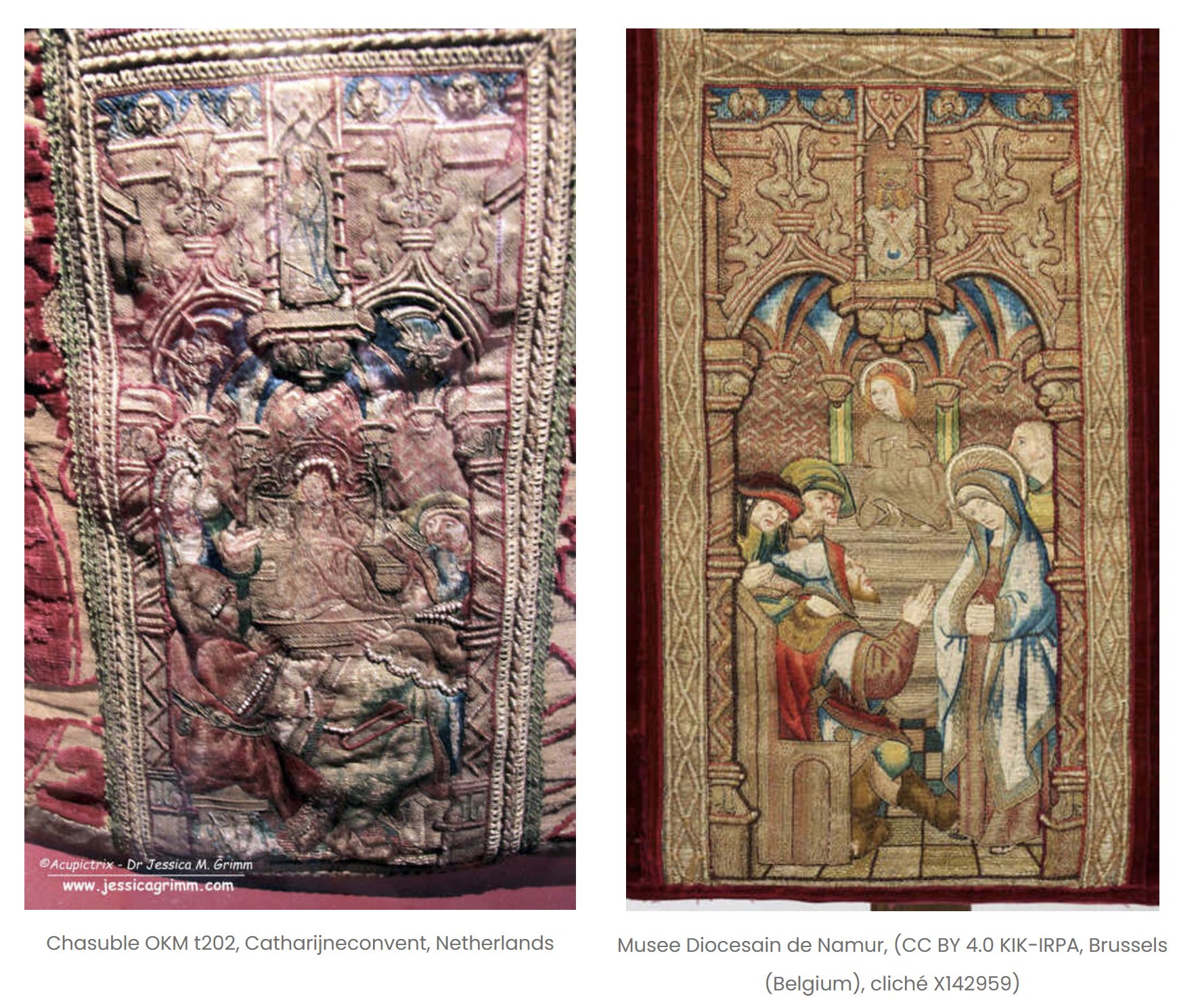
Design process of late medieval embroidered vestments

Last week, we looked at five different embroidered versions of the same Adoration of the Magi design. By changing materials and embroidery techniques, these late 15th and early 16th century embroideries look quite different from each other. The scene was part of four chasubles and a loose chasuble cross. But what about the other scenes complementing the main Adoration of the Magi scene? Where they also identical on all five pieces? Let’s find out what Read more