Gathering materials for Gothic Pansy
Medieval goldwork embroidery employed silk embroidery threads in combination with metal threads. And not just any silk threads: filament silk. Each silk cocoon produces one filament. Many of these filaments combined make the silk thread. Because the filament is not interrupted by breaks, twined together, or twisted to produce the silk threads, its sheen is unrivalled. It is also the most expensive silk thread, as substandard cocoons cannot be used. The high sheen enhances the glow of the metal threads. I strongly recommend using filament silk for this piece. The outcome will be very different when you use spun silk or even a stranded cotton. Furthermore, working with filament silk is a skill. The brands listed below sell threads on spools. That’s easier to handle, but more pricey. When you feel that you have tamed these, you can progress to Chinese flat silk sold in bundles and hanks – much cheaper than stranded cotton!
Equally, I recommend using a slate frame for a piece like this. It will keep your work drum taut throughout the stitching. However, you can also use a large hoop. In that case, please keep tightening your fabric regularly and keep it on the grain. Sources for slate frames are: Jenny Adin-Christie, Royal School of Needlework, and Ecclesiastical Sewing in the USA. I personally own slate frames from all three places and know that they are top quality. Beware of cheap slate frames on offer (by clicking the links you will see what a good-quality slate frame costs). They are not worth the money as they are usually made of cheap, soft wood that cannot stand the strain. Use a good-quality hoop instead!
Note: I DID actually stitch the design using a hoop. The retreat organisers, for whom this design was first intended, requested it. Was it nice to work with? No, the constant re-tightening of the fabric drove me crazy.
Embroidery
- Zweigart Newcastle natural 40ct linen. The size depends on the size of your slate frame (or hoop) and on what you plan to do with your finished embroidery. How much extra fabric do you need around the design? I prefer the natural coloured linen above stark white varieties. Gaps between threads and stitches are just not going to be so obvious.
- If you plan to attach your finished embroidery to some fancy fabric like it would have been in the medieval period, pick a non-stretchy variety. I have used a modern green easy-iron chasuble fabric. However, you can find period replicas at Sator of Bohemia.
- Contrasting sewing thread.
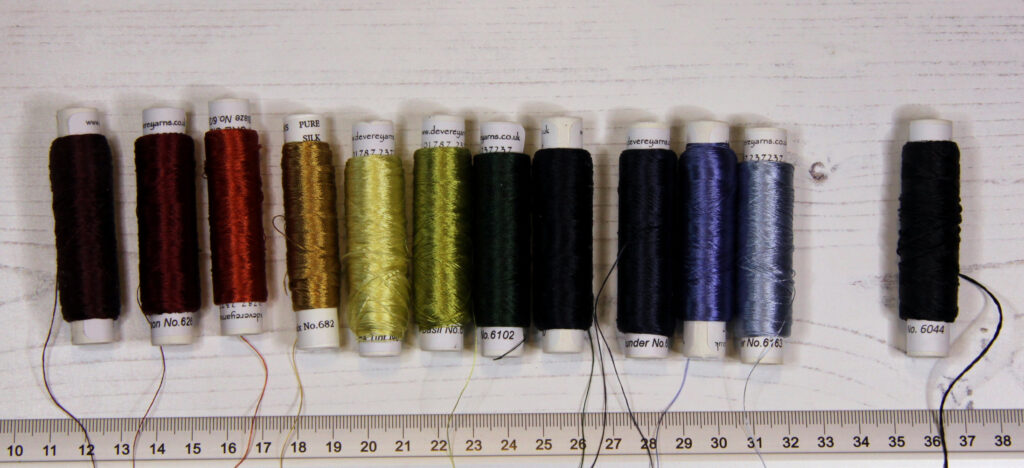
- DeVere yarns fine silks #6, 200m spools: Acanthus, Basil, Blaze, Busby, Chamois, Damson, Glacier, Lime tint, Midnight, Thunder, Wine & a thicker thread #60: Ebony.
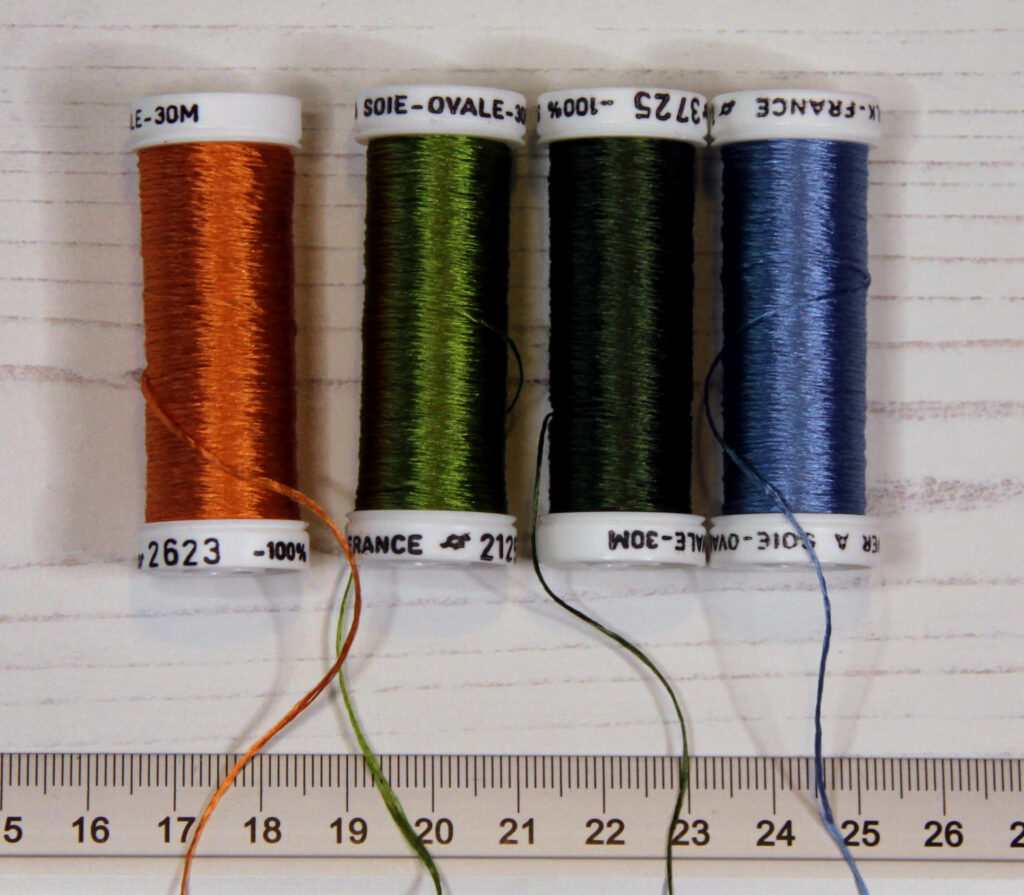
- Soie Ovale by Au ver a Soie: #1444, #2125, #2623 & #3725.
- You can also use Chinese Flat Silk from Oriental Cultures in Ebay. Below is a video on how to store and use these lovely threads:
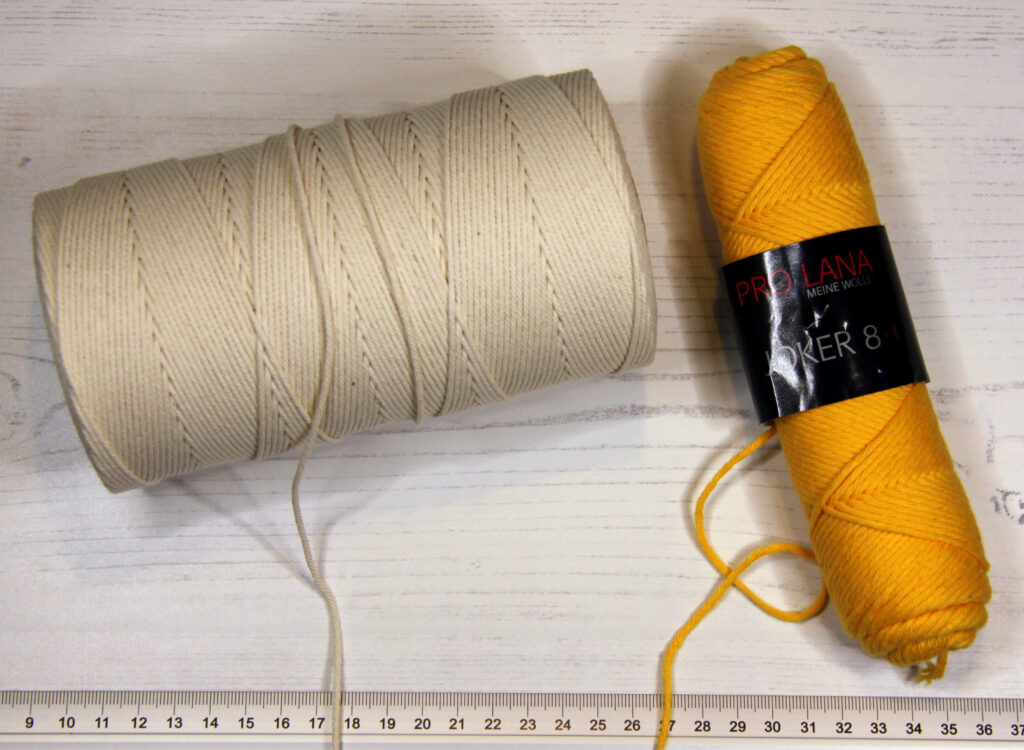
- 1 m soft cotton string for padding.
- Gilt passing thread #6. A spool of 15 grams is plenty. There is no such thing as wholesale pricing for gold thread. Try buying directly from the manufacturer, as this is always your cheapest option. Manufacturers of gold thread are: M.Maurer (it is called Stech 140/150), Golden Threads (contact owner Alec Birdwood abirdwood@gmail.com), Benton & Johnson (contact Neil Halford neil.halford@toye.com) and Velasco (called Muestra No 6; technically a re-seller in Spain). For US embroiderers: https://www.ecclesiasticalsewing.com/collections/gold-embroidery-thread They are re-sellers and sell per metre. You would need about 40 metres. However, please do check out the other links I have provided. Even with the tariffs and the postage, they are probably a lot cheaper. Buying 40 metres will set you back $93!
- 3m gilt fine Rococco. You can probably get this from your gold thread source.
- 2m Gilt Twist #1.5 & 2m Gilt Twist #1. You can probably get them from your gold thread source.
Tools
- Needles. You probably have needles in your stash that are close to or are #5, #10, #12, tapestry #24 & #28 and chenille #18.
- Scissors. I happily use my “good” embroidery scissors to cut passing thread, twist and Rococo.
- Beeswax. You will need to apply the twists over your previously stitched goldwork. A little beeswax strengthens your couching thread.
- Pencil/Marker
- Pins
- Transparent paper
- Ruler
- lightbox
Materials for framing up your slate frame
- Buttonhole thread
- Webbing (woven cotton twill tape).
- String. Used to lace your fabric to your slate frame on two sides. I buy mine from Holland Wool (the #24 and #32 are suitable for lacing). This is also a perfect padding thread for medieval embroidery (see above).
- Bracing needle (or a very large needle).
Materials for mounting
- Book binding or white conservation glue
- Mount board 2,2mm thickness
- Pins with a glass head
- Ruler
- Pencil (& eraser)
- Stanley knife
- Cutting mat
- Calico
- non stretchy fabric for the back
- Buttonhole thread
- Curved needle